
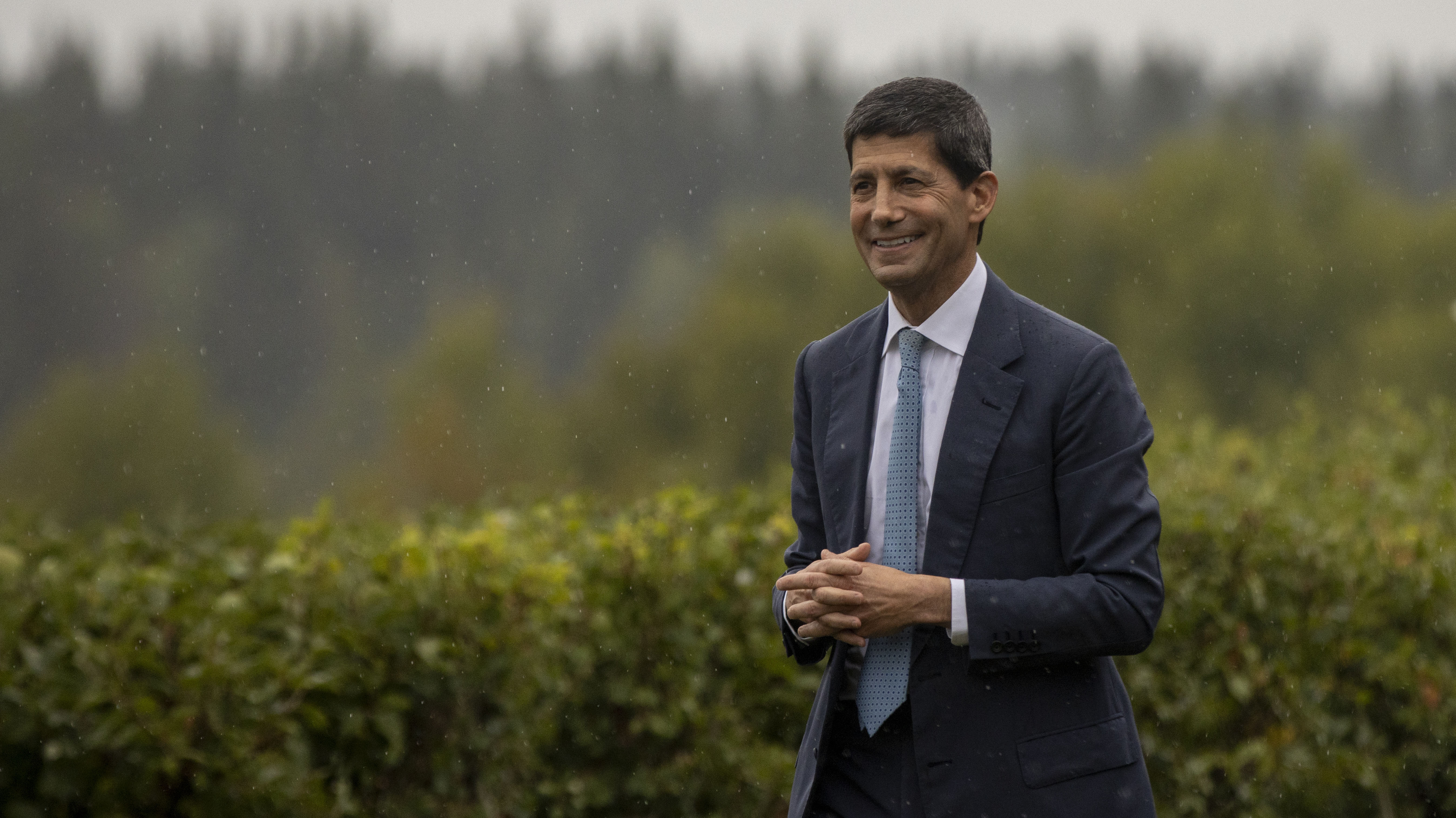
(WASHINGTON) — In a highly anticipated speech Friday morning, Federal Reserve Chairman Kevin Warsh voiced concern about persistently high inflation, saying the central bank should focus on bringing down prices — but stopped short of explicitly calling for an interest rate hike.
“We must be confident that underlying inflation is moving to our objective, clearly and at sufficient speed. Otherwise, we have work to do,” Warsh said in remarks prepared for delivery at the Fed’s annual conference in Jackson Hole, Wyoming.
The remarks signaled a strong commitment by the newly installed Fed chair to fight inflation.
Inflation eased slightly in July, the most recent month on record, but has spiked in recent months fueled by higher oil prices from the Middle East crisis. Overall prices have been increasing at a pace above the Fed’s 2% target for more than five years, which Warsh said is a responsibility that lies “squarely” with the central bank.
“The Fed’s predominant focus right now should be on prices,” said Warsh, who is in his third month in the role after replacing Jerome Powell.
Typically the Fed hikes interest rates to tame high prices. Warsh did not directly comment on the central bank’s interest rate plans, noting the practice of “forward guidance” — where the Fed telegraphs its next moves in advance — “should be limited” and “has overstayed its welcome.”
President Donald Trump has repeatedly called on the Fed to cut interest rates.
Investors are now pricing in a roughly 60% chance the Fed increases its key borrowing rate next month, up from 35% Thursday ahead of Warsh’s speech, according to CME FedWatch.
“We believe that markets heard what they needed to hear to believe that Warsh will tighten monetary conditions to restrain inflation, and that he will encourage the FOMC to pull the trigger soon,” said Carl Weinberg, chief economist at High Frequency Economics, in a research note after Warsh’s speech.
Warsh said Friday that he is “impressed by the overall performance of the economy, which appears to have strengthened.” He pointed to solid consumer spending and a steady job market. But Warsh noted that certain sectors of the economy like housing and agriculture “are showing strains.”
He also detailed how artificial intelligence is reshaping the economy, with more than half of capital expenditure growth this year so far attributed to the buildout of AI.
“We’ve come to a hinge point in history,” Warsh said.
Copyright © 2026, ABC Audio. All rights reserved.