
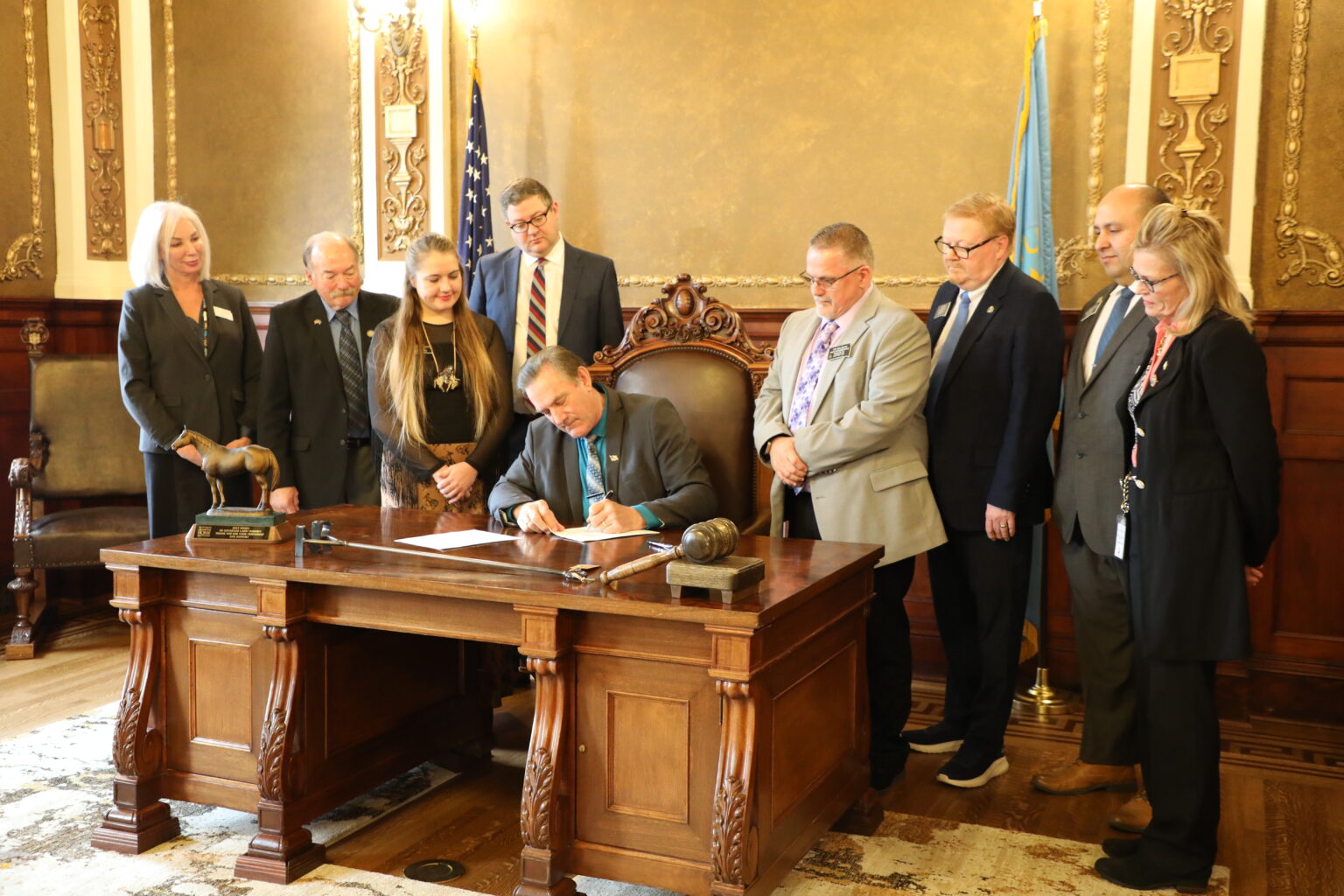
Meghan O’Brien/South Dakota Searchlight
A pair of bills aimed at strengthening emergency medical services in South Dakota earned Gov. Larry Rhoden’s approval on Monday.
Rhoden said in a statement that “EMS teams are on the front lines” of efforts to keep South Dakotans safe.
“These bills give EMS professionals the protections and support they need to respond quickly and effectively — and they give South Dakotans peace of mind knowing help is always within reach,” Rhoden said.
The Legislature passed both bills last month. The first bill protects registered nurses and licensed practical nurses who provide care in the back of an ambulance. It clarifies civil liability protections for nurses in an emergency situation, according to Linda Young, executive director of the South Dakota Board of Nursing.
“Nurses have been providing emergency services throughout many, many, many years, in emergency rooms, on air ambulances,” Young said in a January committee hearing. “This bill really does allow them greater flexibility to allow for those nurses to provide care on a ground ambulance.”
The bill’s sponsor, Rep. Tim Walburg, R-Madison, said it also improves the continuum of care for people in rural areas, where nurses take on a variety of responsibilities.
Walburg also sponsored the second bill, which adds firefighters and law enforcement officers to the statutory definition of “ambulance operator,” and gives local officials more deciding power in who can drive an ambulance. Law enforcement officers and firefighters would be able to drive an ambulance as long as they complete training and CPR certification.
In a January committee hearing, Rep. Eric Emery, D-Rosebud, expressed support for the legislation. Emery, a paramedic, said first responders should work in a collaborative environment, especially in rural areas.
“Firefighters and law enforcement officers, we work all together, hand in hand,” Emery said. “It’ll put a lot of people within the EMS community here in South Dakota at ease and hopefully bring back a lot of those volunteers that had left.”