
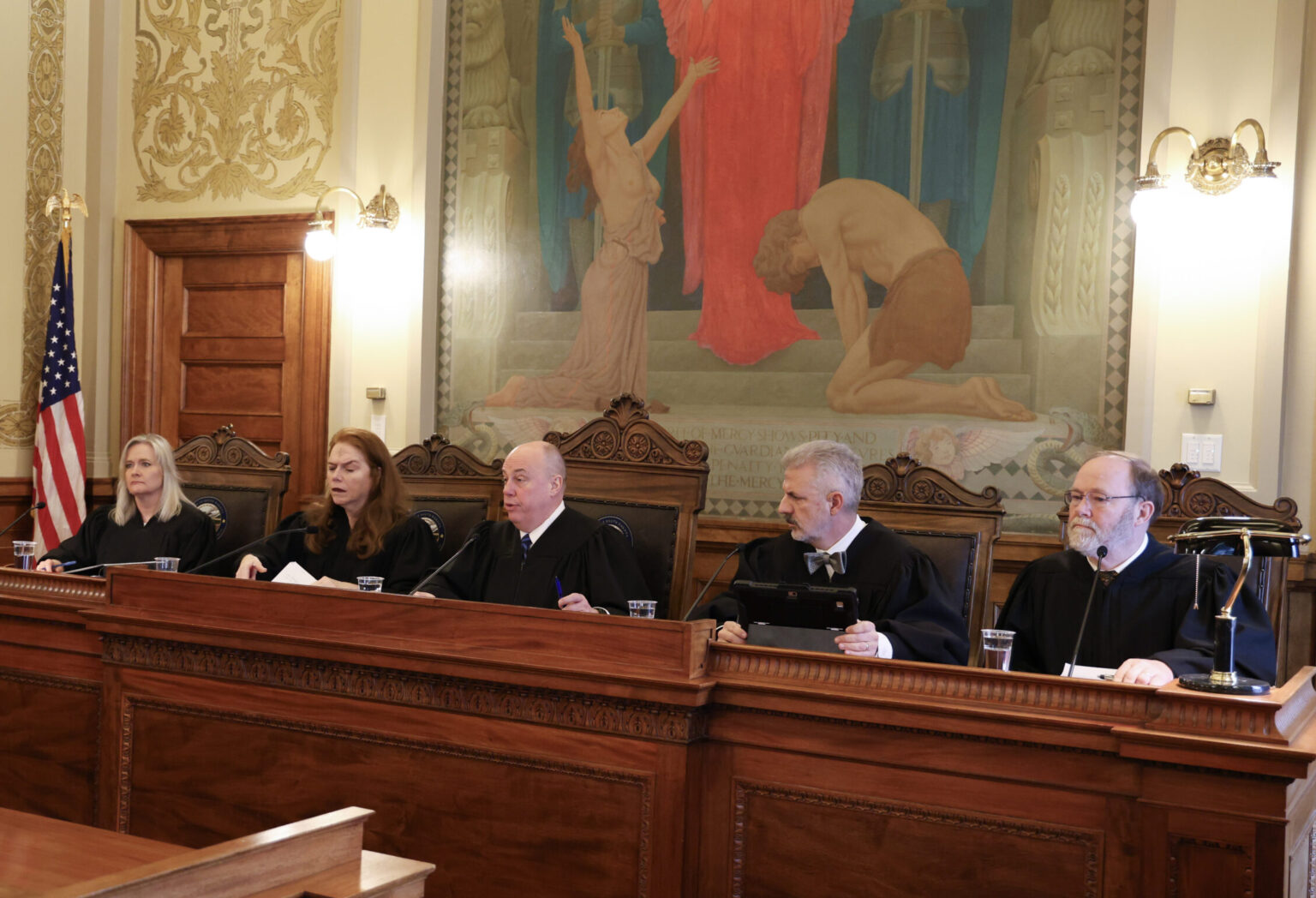
John Hult/South Dakota Searchlight
The lieutenant governor in South Dakota has the authority to break a tie vote in the state Senate, the South Dakota Supreme Court said Wednesday.
The ruling comes one day after Lt. Gov. Tony Venhuizen opted not to break a tie on a bill meant to make a temporary sales tax reduction permanent. The tie vote meant the bill was defeated, but the Senate could opt to reconsider it.
Gov. Larry Rhoden had asked the state’s high court for an advisory opinion on the lieutenant governor’s tiebreaking authority in light of debate on the matter that followed an earlier tie vote on a measure meant to adjust the permitting process for energy transmission facilities.
Tie votes are an issue in the 35-member Senate this year because one senator, Sioux Falls Republican Arch Beal, has been away all session for medical reasons.
The day after Venhuizen voted to break the tie and defeat the permitting bill, Sioux Falls Republican Chris Karr raised a point of order and challenged the constitutionality of Venhuizen’s tiebreaking authority under the state constitution.
The Senate supported Karr’s challenge to the vote. The body then reconsidered the permitting bill, amended it and passed it on a majority vote.
In the advisory opinion, the high court ruled unanimously that the lieutenant governor has the right to break a tie.
One section of the state constitution says no bill can become law without “a majority of all members” of the Senate. Another says the lieutenant governor — who presides over the chamber as Senate president — has no vote in the Senate unless the members are “equally divided.”
The Supreme Court ruled that the latter provision “explicitly authorizes the Lieutenant Governor to vote when necessary to break a tie.”
In the absence of a majority vote from all members-elect, the ruling says, the provision on tiebreaking offers “a method by which a majority can be obtained.”