
Makenzie Huber/South Dakota Searchlight
Under state law, any “interested person” can petition state boards to change administrative rules.
But South Dakota citizens and organizations don’t qualify as “persons” under that chapter of state law. The existence of that limitation surprised some members of the state Board of Elections on Wednesday during a meeting called for the express purpose of voting to advance or defeat a rules package the body spent two hours pondering last week.
The League of Women Voters leaned on what it believed to be its right to petition state board earlier this month when it offered the board a series of rule changes the group argued were necessary to standardize the administration of a new state law that requires first-time voter registrants to provide proof of U.S. citizenship.
The board dismissed the petition in a 5-2 vote on Wednesday after one of the board members told the group that the advocacy nonprofit lacks the legal standing to ask for the changes.
Last minute check of statutes calls petitioners’ status into question
The definition of a “person” able to petition a state board for a rule change only includes political subdivisions or agencies of the state, board member and retired Rapid City attorney Scott McGregor said.
McGregor did not attend the initial board meeting last week when the petition was presented, but he reviewed the matter over the weekend, he told South Dakota Searchlight after the meeting. With a 40-year career “making legal arguments based on statutory interpretations,” McGregor also reviewed relevant laws regarding the petition process.
McGregor said he wanted to see if “interested person” had a broad enough definition to include organizations such as the League of Women Voters.
“‘Person’ in various contexts has an awful lot of definitions,” McGregor said. “It depends on the section of the law you’re dealing with and the level of government you’re dealing with.”
McGregor spoke with the Secretary of State’s Office and its legal counsel earlier this week to confirm his interpretation. Deputy Secretary Tom Deadrick told McGregor that other agencies have accepted rule petitions from individuals.
“Even if other agencies have done it,” McGregor told Searchlight,” that doesn’t change the law.”
McGregor told board members he was “shocked” by the limitations.
“That may be an oversight, but that’s all that’s in there,” McGregor said during the meeting.
Board member Kent Alberty said he was “disappointed” that the law’s restrictions on petitioners wasn’t shared with board members earlier. Alberty, during last week’s meeting, said that he saw a need for at least some standardization in procedures in the administration of the citizenship requirement.
Alberty voted against the dismissal on Wednesday, as did Dewey County Auditor Jamalia Franzen.
McGregor told South Dakota Searchlight that the law should be reviewed legislatively.
“There is a certain unfairness to it,” McGregor said.
Rule changes, responses
Acceptable documents for proving one’s citizenship under the new law in question on Wednesday include a birth certificate, passport, driver’s license, non-driver’s identification card or tribal identification card, or “any other type of acceptable documentation” under federal law. Photocopies of most of those documents are acceptable, but registrants using state- or tribally issued identification cards must have the physical cards with them.
If a voter does not provide necessary documentation, they are registered as federal-only voters and cannot participate in local or state elections.
The League of Women Voters proposals included:
- Allowing photocopies of identification cards, such as tribal IDs and driver’s licenses, to be used as proof of citizenship.
- Recognizing tribal identification cards from any federally recognized tribe, rather than just the nine tribes in South Dakota.
- Allowing voters designated as federal-only an opportunity to cast provisional ballots for local elections while appealing their eligibility.
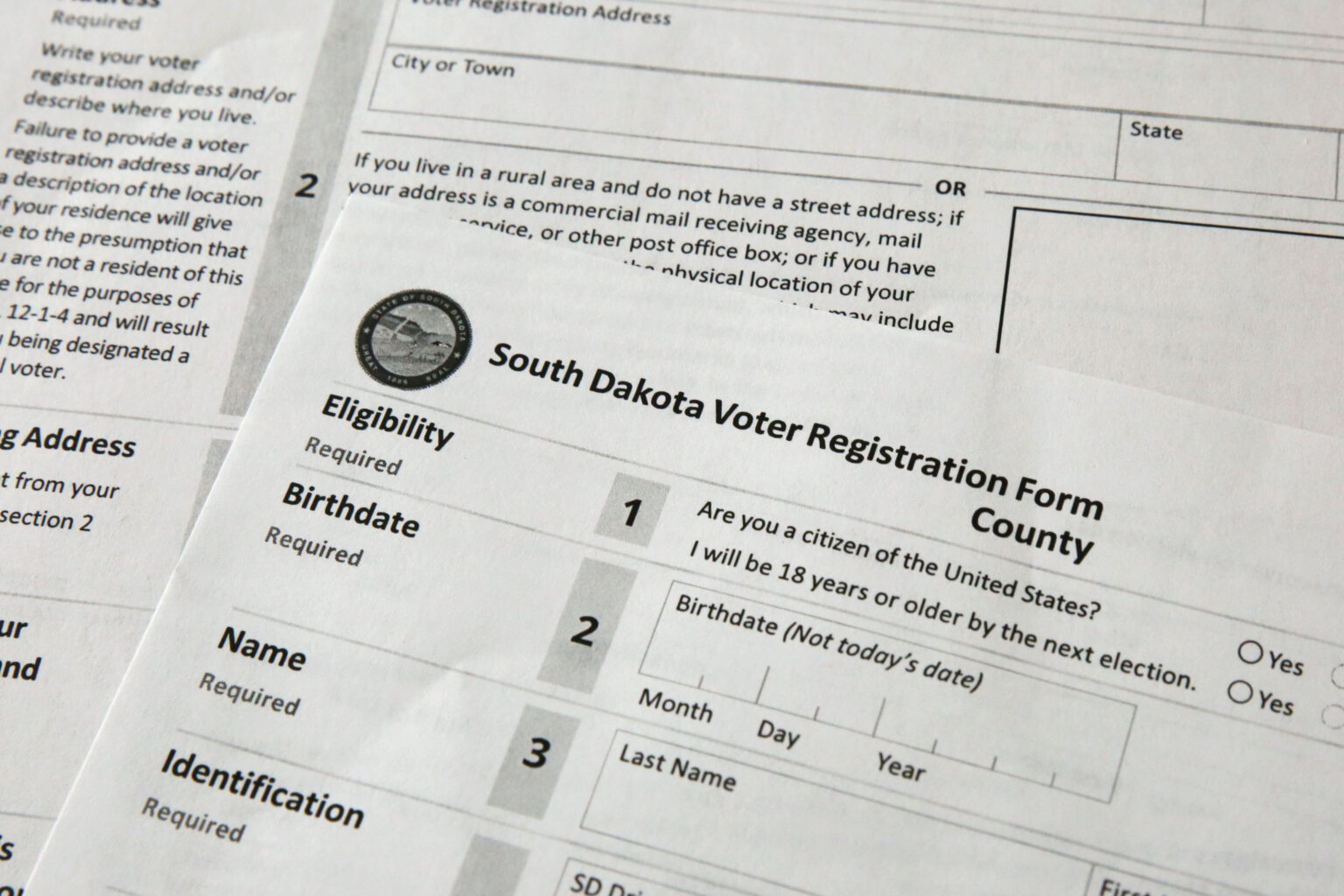
- Adding specific language to the state’s voter registration form to explain that not offering a physical South Dakota address would cause them to be designated as federal-only voters.
- Adding language to notifications confirming a voter’s registration clearly saying if the registrant is a federal-only voter, as well as language explaining how to remedy the situation.
South Dakota Secretary of State Monae Johnson was ill during last week’s board meeting, at which the group took testimony from supporters of each rule. No one from her office was on hand to rebut the supporters, but her staff did file written responses in opposition.
On Wednesday, Johnson told the board that the new law, as written, does not allow photocopies of driver’s licenses, only the original card. She added that while no formal appeal process exists for voters registered as federal-only, they can remedy their status by resubmitting their registration with proper documentation.
“The League of Women Voters and other concerned organizations could look at amending the current law in the 2027 legislative session, if that is their wish,” Johnson said.
Johnson will not be seeking re-election for secretary of state in November. She lost the Republican nomination at last month’s state party convention to state Rep. Heather Baxter, who supported the bill that created the new law during the legislative session and will oversee its administration if elected. Baxter will face Democratic nominee Terrence Davis in the general election.
Baxter submitted public comment ahead of Wednesday’s meeting and compared the proposed changes to presenting a photocopy of identification to get through security at the airport or purchase alcohol. The state Department of Public Safety does not accept photocopies of identification documents, Baxter said.
“So why allow the League to make such changes to what law already clearly states as well as other state departments?!” Baxter wrote.
Amy Scott-Stoltz, president of the League of Women Voters of South Dakota, said the organization is “disappointed” in the board’s decision and “reviewing our options” regarding advancing its proposals and challenging the board’s dismissal.
The group’s petition was meant to make sure the new law is “uniformly implemented across the state and that voters and county auditors alike would have clear guidance about their obligations under the law in advance of the November election,” Scott-Stoltz said.
“We intend to continue our work in South Dakota to ensure that every American citizen can access the ballot box,” Scott-Stoltz said.