
Meghan O’Brien/South Dakota Searchlight
HURON — Farmers across the country may soon receive a share of a $12 billion farm aid package, as promised by Donald Trump earlier this week. Some South Dakota farmers say it’s not the change they want to see.
“I would rather have trade deals than bailouts,” said Michael Miller, a farmer from Freeman.
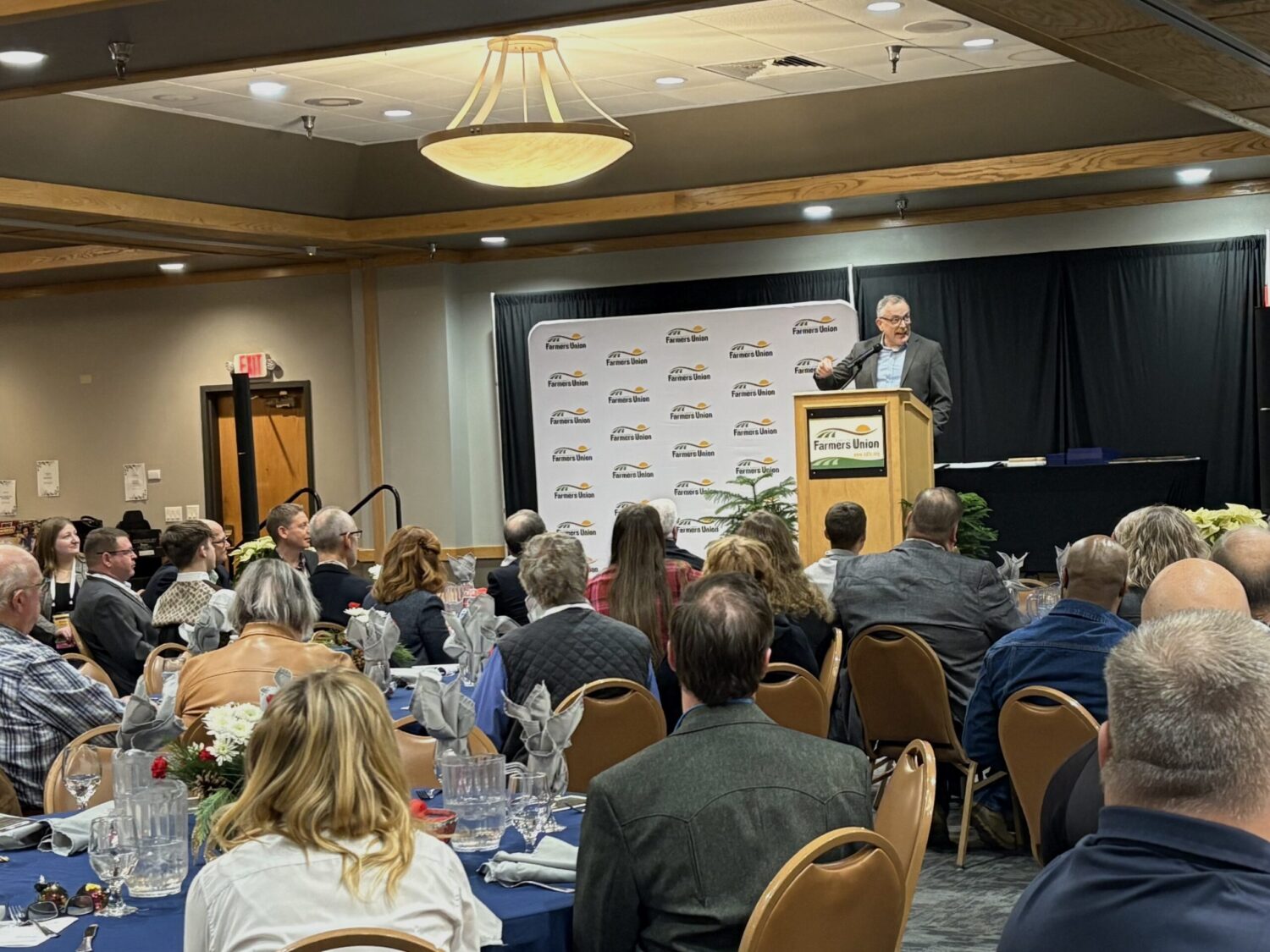
It’s a sentiment many other farmers echoed at an annual meeting Wednesday for the South Dakota Farmers Union. Trump’s “bridge payments” are meant to help farmers who struggled to sell crops during tariff-related market disruptions, such as China’s temporary boycott of U.S. soybean purchases.
Trump announced Monday that farmers who have been impacted by “unfair market disruption” will receive a one-time, per-acre payment, which he said is available from tariff revenues.
The payments are intended for row-crop farmers, with about $1 billion reserved for specialty crop farmers. Department of Agriculture Secretary Brooke Rollins said funds should be in farmers’ hands by the end of February, at a limit of $155,000 per recipient.
Rob Larew, president of the National Farmers Union, hopes the payout is part of a longer-term solution to improve trade relationships.
“We really need fundamental changes with the way we support agriculture and farmers and ranchers,” Larew said, “so that we don’t find ourselves in another situation like this.”
In his conversations with financial lenders in South Dakota and across the country, Larew said he’s heard concern about the deeper economic impact of unstable international trade. Lenders told him they’ll be unable to make loans for up to 50% of their farm customers in the next year.
“That’s going to have not only devastating impact for those particular families,” he said. “But then the succession, the land turnover and what it does to those communities is going to have a lasting impact.”
Chad Johnson is a fourth-generation farmer in Brown County, where he raises corn, soybeans and cattle. At the start of the second Trump administration, he noticed the impact of the trade war almost immediately: Prices increased for fertilizer and other inputs, and neighboring farms were either unable to sell their product or forced to sell at a loss.
Johnson wants people who aren’t involved in agriculture to understand that for some farmers, taking the federal payments is a matter of survival.
“We buy retail, we sell wholesale, and we pay the freight both ways,” he said. “We’re basically price takers, not price makers, and it’s hard to do that when prices are suppressed, and our inputs are so high.”
He’s already had to pay more for nitrous and phosphorus. The federal payouts, he said, will come “into our hands and right back out.”