
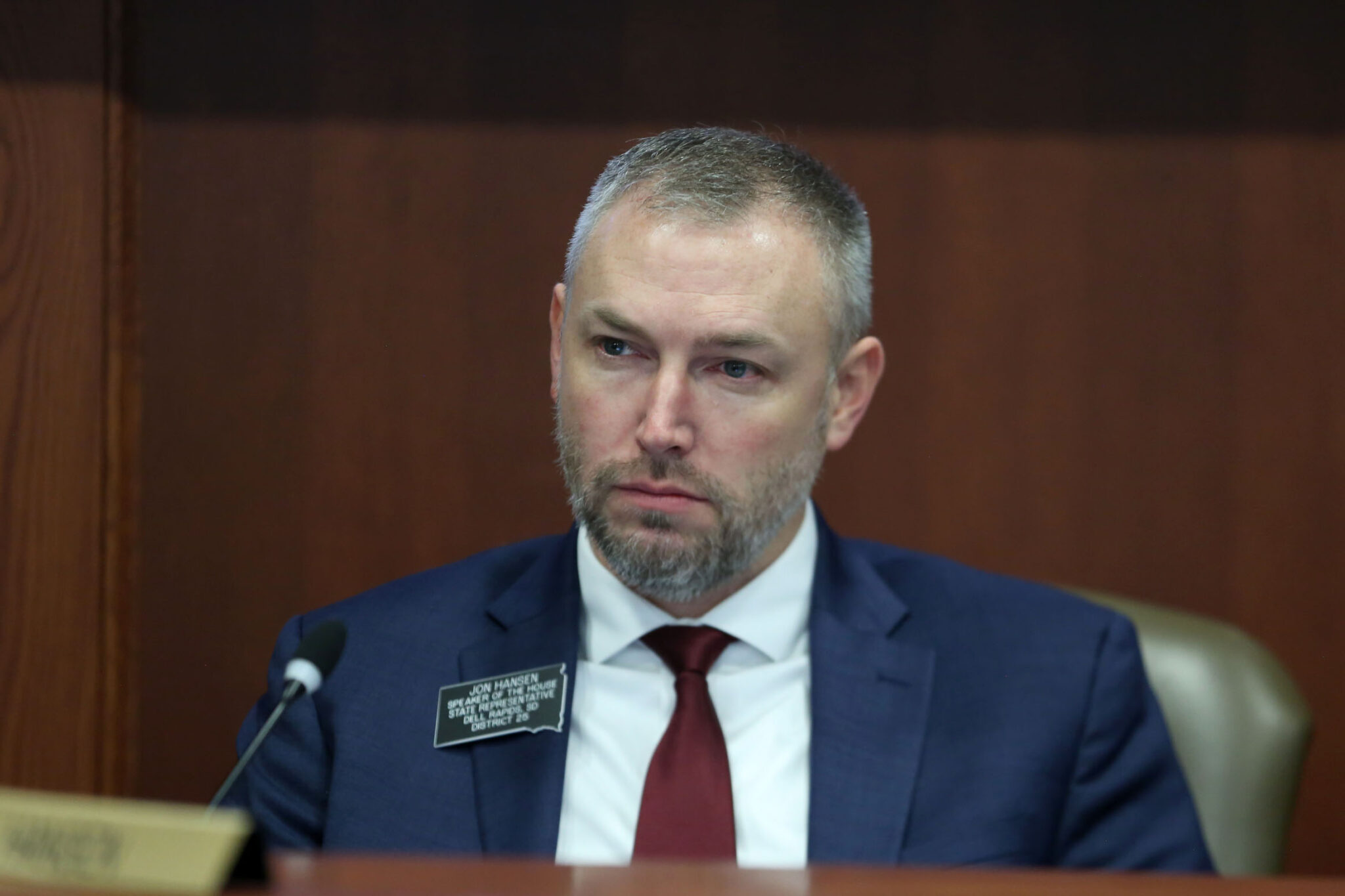
Makenzie Huber/South Dakota Searchlight
The South Dakota Legislature’s Rules Review Committee approved rules Tuesday allowing up to $30 million in loans from a state housing infrastructure fund to help finance airport expansion projects in Rapid City and Sioux Falls, despite opposition from the state speaker of the House and another lawmaker.
The rules implement a law that Republican Gov. Larry Rhoden requested last year and signed in March after the Legislature approved it.
The law authorizes loans up to $15 million each to the state’s two largest commercial airports at 2% interest with 20-year repayment periods. Repayments and interest must be returned to the housing fund to support future housing infrastructure projects.
The Legislature and former Gov. Kristi Noem created the housing fund in 2023 with $200 million: $100 million for grants and $100 million for loans to support streets, sewer, water and other infrastructure needed for housing developments. The package used $150 million in state money and $50 million in federal American Rescue Plan funds.
The rules package passed on Tuesday in a 4-2 vote at the Capitol in Pierre. Sen. Taffy Howard, R-Rapid City, and House Speaker Jon Hansen, R-Dell Rapids, voted against it.
Both said they opposed the rules because the change in how the housing funds can be used should have required a two-thirds majority vote in both legislative chambers — a higher bar than the bill achieved. It passed 22-11 in the Senate, which was two votes short of the two-thirds threshold, and 43-24 in the House, which was four votes short of two-thirds support.
The state constitution requires appropriations bills to receive a two-thirds vote, but legislators sometimes debate what constitutes an appropriation.
Hansen, as the presiding officer in the House, tried to require a two-thirds majority during the legislative session, saying the bill would change the purpose of how the money was being spent. His decision was overruled in a 34-33 House procedural vote, with lawmakers arguing the bill itself didn’t mention “appropriation” and that the funds were being loaned rather than spent. Rep. Tim Walburg, R-Madison, called the bill at the time a “funding transfer.”
Hansen, who is not running for reelection after his failed bid for the Republican nomination for governor last month, said Tuesday the Legislature should revisit how it defines appropriations — specifically whether the definition should cover not just the authorization of new funds but also changes to how previously appropriated funds can be used.
“In this case, the specific purpose was changed to something different. Therefore, it was a new appropriation and should have required a two-thirds vote,” Hansen said. “In the future, I think the Legislature really needs to just sit back, away from any particular bill that’s being driven through the Legislature, and really consider that definition and how to apply it.”
Senate Majority Leader Jim Mehlhaff, R-Pierre, said procedural concerns weren’t a sufficient reason to reject a package that had already cleared the full legislative process.
“I don’t believe the committee is here to thwart the will of the Legislature,” Mehlhaff said.
The committee approved similar rules following legislative action last year allowing a $15 million, zero-interest loan from the same fund for a new elementary school serving the Douglas School District near Ellsworth Air Force Base. Howard and Hansen both voted for that rule change, after Howard voted for the bill and Hansen voted against it.
Julie Johnson, an Aberdeen lawyer and lobbyist for Homes for South Dakota, told the committee Tuesday the organization supports the change to the rules for airports, but wants to ensure the funds are repaid and directed toward housing infrastructure needs across the state.
“We want to be sure the world knows that this isn’t a slush fund and there are still needs for infrastructure loan monies,” Johnson said.
By late 2025, about $65 million remained in the loan portion of the fund. The program has helped finance 87 projects expected to produce 7,464 single-family lots and 5,882 multifamily units.
Rapid City plans a concourse expansion at its airport adding five gates and more passenger space. Sioux Falls is building a new concourse with up to five additional aircraft gates and 57,000 square feet of seating and circulation space. The projects are expected to cost more than $100 million apiece.