
Meghan O’Brien/South Dakota Searchlight
PIERRE — Flesh-eating pests spreading north into the United States have so far been kept at bay from South Dakota, but state animal industry leaders are keeping an eye on the threat.
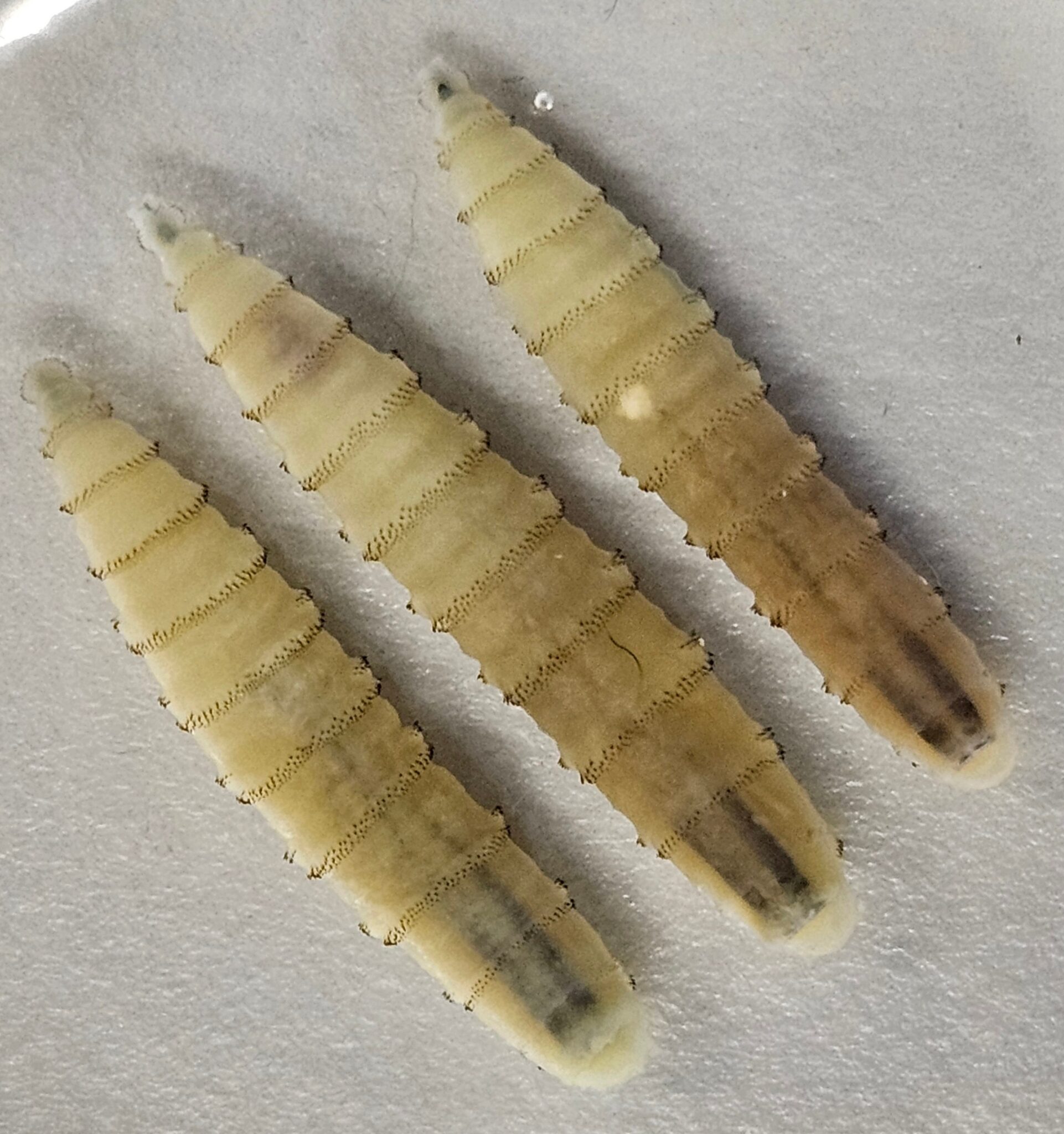
New World screwworm cases surfaced in Texas in early June. The name “screwworm” refers to the larvae, or maggots, that burrow into open wounds, feeding as they go “like a screw being driven into wood,” according to the U.S. Department of Agriculture. They primarily infest livestock, wildlife, pets and birds, leading to sickness or death. In rare cases, they can infect humans.
The larvae grow into flies about the size of a common housefly, with orange eyes, a blue or green body, and three dark stripes along the back.
Across Texas and in southeastern New Mexico, 35 total cases have been reported, primarily in cattle, according to the USDA. No cases have been reported in South Dakota. Texas is working with federal partners to control the population and track animal movements, according to South Dakota State Veterinarian Mendel Miller.
Miller said he has no immediate concerns due to Texas’ containment strategies and South Dakota’s requirements for veterinary inspections and health records on animals coming into the state.
“The system’s in place to prevent it from getting here, provided everybody follows the rules and follows the system,” he said.
New World screwworms reached as far north as South Dakota from 1947 to 1950 via infested livestock shipments, according to the USDA.
A traditional boundary line for screwworm infections runs through central Kansas, Miller said. The imaginary line separates warmer, southern climates that are more welcoming to the insects from cooler, northern climates.
“With global climate change and things like that, milder winters, that line may creep north,” Miller said. “But, we still have winter. That’s probably our best mechanism to prevent it from getting established.”
For now, Miller said South Dakota is “still cold enough.”
“The ground still freezes and we still get snow cover,” he said. “As long as we have winter, we should be fairly safe.”
He recommended keeping a close watch on livestock. Most cattle infections happen during castration, Miller said. Sheep infections happen during dehorning and tail docking, when the tail is removed from the animal.
“The best thing to put on their animal is their eyes,” he said of farmers and ranchers.
Screwworm had been mostly eliminated from the United States in the 1960s, through the use of sterile flies to end the life cycle of other flies, Miller said. Screwworms have been confined mostly to Mexico and Central America since then, although there have been periodic outbreaks in the United States.
The federal government is using sterile flies again in its eradication efforts. Sterilized males mate with females, which lay unfertilized eggs. Because females only mate once in their lifespan, this could reduce and eliminate the population.
The USDA recently broke ground on a $750 million sterile fly facility in Edinburg, Texas, that aims to produce up to 300 million sterile flies per week when it opens next year. The agency has also invested in sterile fly facilities in Mexico and Panama.
The Canadian Food Inspection Agency announced on Monday it would suspend several animal exports from Texas, including cattle, horses, pigs and bison.