
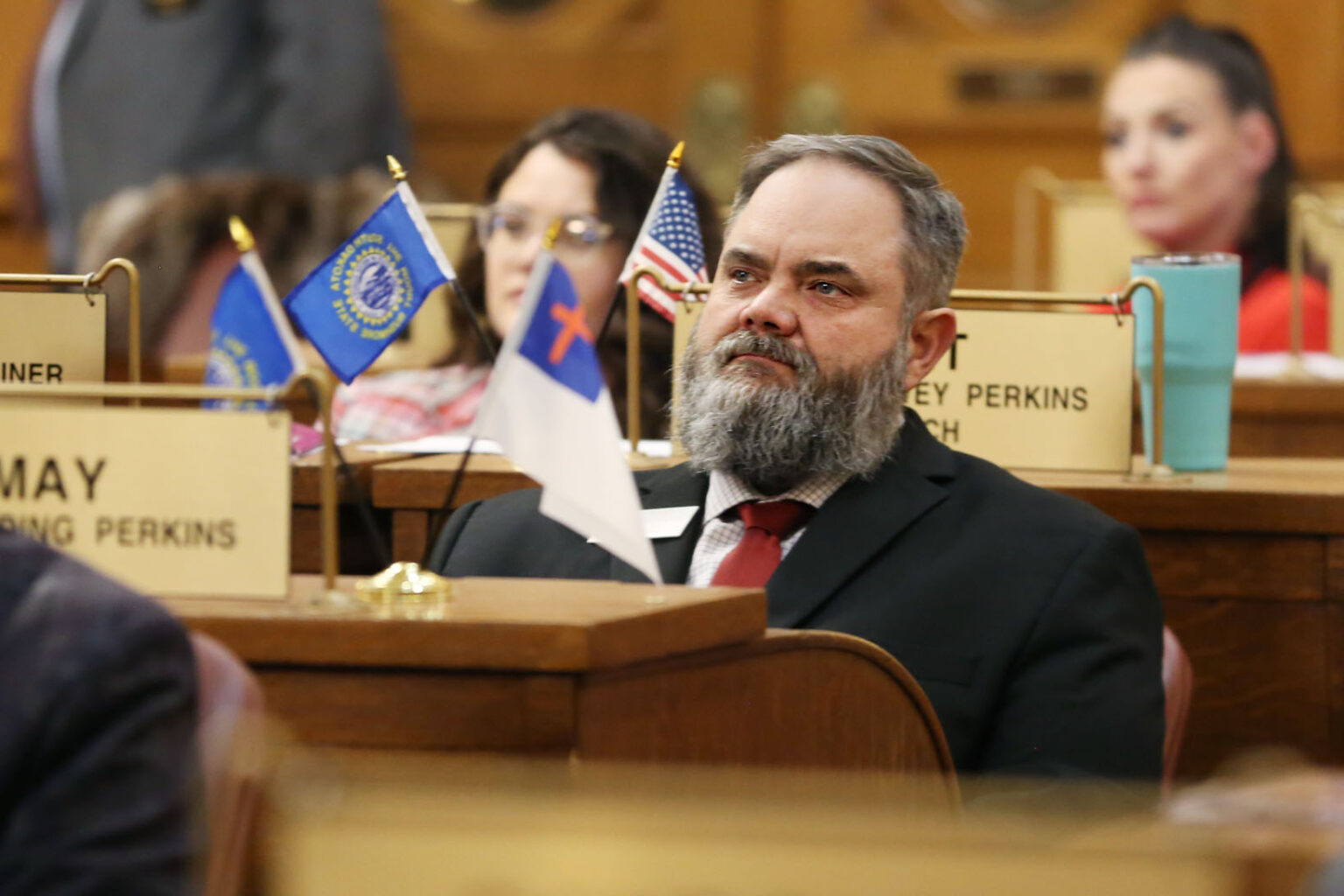
John Hult/South Dakota Searchlight
Constitutional concerns helped tank a bill Tuesday in the South Dakota House of Representatives that aimed to ban payments to petition circulators in ballot measure campaigns.
Rep. Travis Ismay, R-Newell, sponsored House Bill 1087. It sought to bar payments for those who want to put initiated laws, referendums or constitutional amendments on the ballot.
Ismay argued that paying circulators undermines the interests of South Dakotans by allowing out-of-state interests to fund campaigns meant to change the state.
Circulators need 17,508 signatures from registered voters to propose a law or challenge a bill passed by the Legislature. They need 35,017 to put a constitutional amendment on the ballot.
Ismay’s bill would allow a court to invalidate a petition if its circulators were found to have been paid.
Rep. Mark Roby, R-Watertown, said South Dakota would be sued over HB 1087 and lose. He pointed to Supreme Court cases that took up the legality of payments for petition circulation and ruled it to be protected First Amendment speech.
Rep. Erik Muckey, D-Sioux Falls, said passing a bill bound to cost taxpayers an untold amount of money for a losing cause is bad policy.
“That’s just fiscally irresponsible use of our state taxpayer dollars,” Muckey said.
Rep. John Hughes, R-Sioux Falls, who was among the members who stood up to back Ismay’s bill, said the fight to defend the bill in court would be worth it.
“Sometimes lawsuits like that are essential to preserve our democracy,” said Hughes, who described every interaction he’s had with paid circulators as “miserable.”
“I could tell they were not from around here, and they were there to harvest signatures,” Hughes said.