
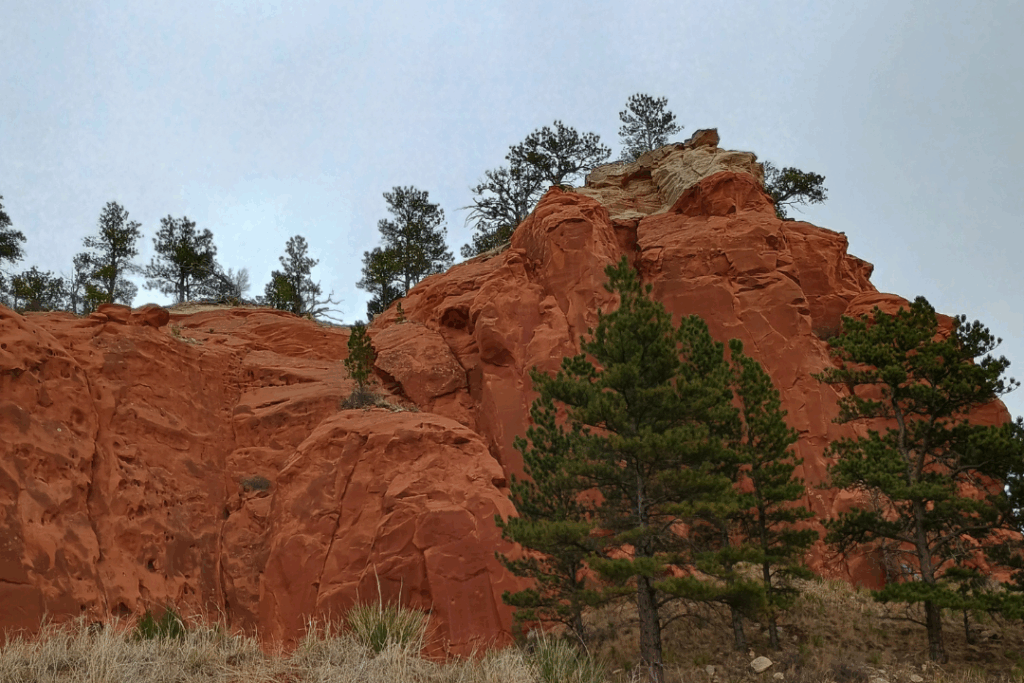
Meghan O’Brien/South Dakota Searchlight
A public hearing about an application to explore underground for uranium in the Black Hills has been rescheduled to May 18 through May 22.
The hearing will take place in Hot Springs at the Mueller Civic Center. It had previously been scheduled for this week but was postponed.
In March 2024, Clean Nuclear Energy Corporation and its Canada-based parent company Nexus Uranium filed an application to drill exploratory holes in search of uranium near Craven Canyon in the southern Black Hills.
The company plans to use 50 sites to drill holes as deep as 700 feet on state-owned land, according to its application. Each hole will take approximately two weeks to drill. The company has additional drilling plans on federally owned land, which are under review by the U.S. Forest Service.
Dozens of individuals and groups have raised formal complaints to the state’s Board of Minerals and Environment about the potential adverse effects of the proposed drilling, including concerns for cultural resources and historic sites, such as ancient Native American petroglyphs in the canyon, and water quality.
Uranium is a metallic, radioactive element used as fuel in nuclear weapons and nuclear power plants. Interest in uranium exploration and mining has risen recently in response to nuclear energy’s potential to meet the growing electricity demands of data centers, which handle the computing needs of artificial intelligence.
The state Board of Minerals and Environment can deny an application to explore for uranium for several reasons, including negative impacts on historical, archaeological or recreational aspects of an area, if those impacts outweigh the benefits of the exploration. The board can also deny the permit if it will negatively affect the productivity of aquifers.