
Seth Tupper/South Dakota Searchlight
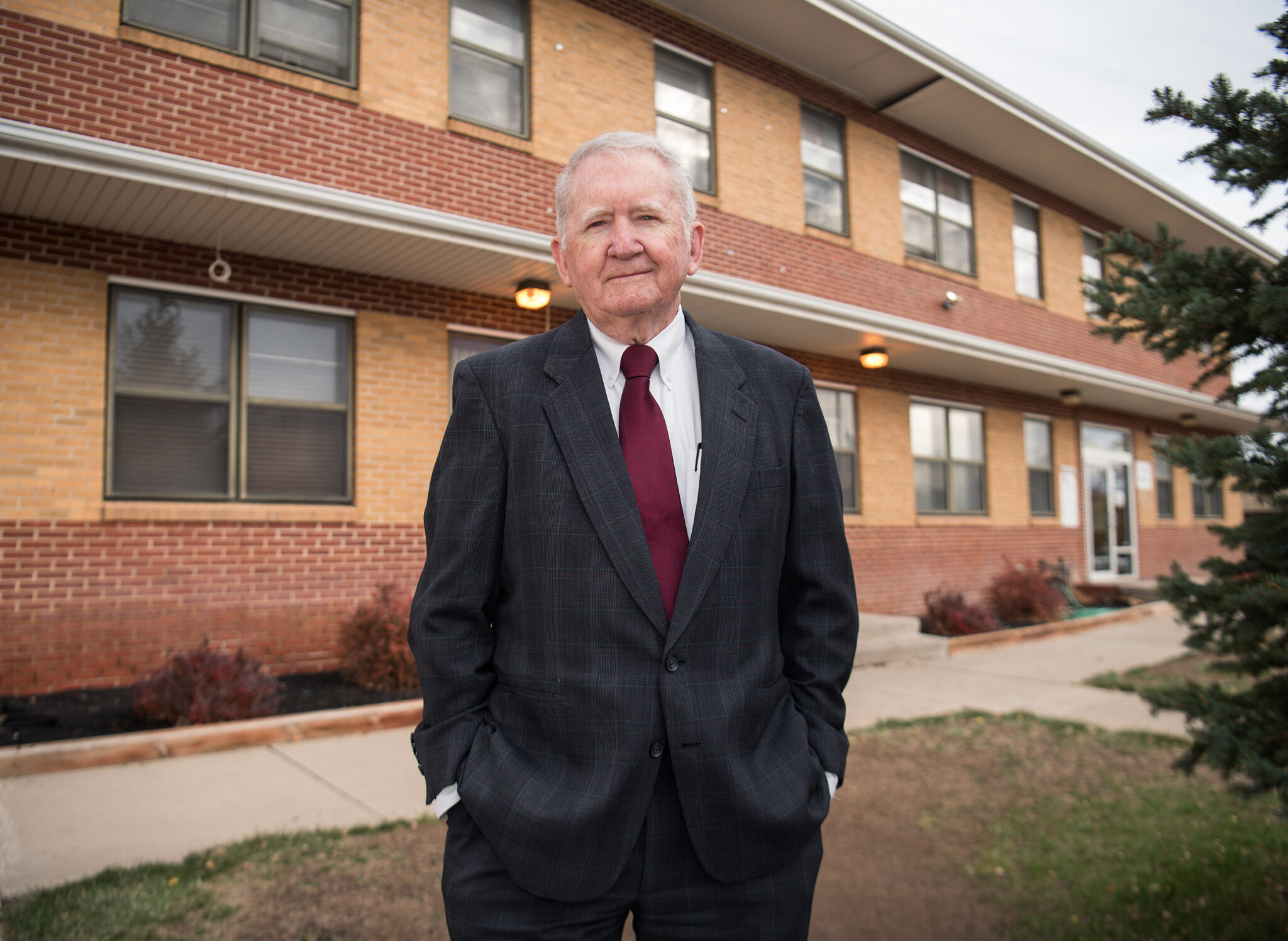
Don Barnett, who died Monday at age 83, was the 29-year-old mayor of Rapid City when it was struck by a flood that killed 238 people on June 9, 1972. He received widespread praise for leading the recovery and helping to ensure that the city never again overbuilt in the Rapid Creek floodplain.
Barnett was photographed by Johnny Sundby and interviewed by Seth Tupper — now the editor of South Dakota Searchlight — for a 2022 book, “Surviving the ’72 Flood,” and a South Dakota Public Broadcasting documentary and podcast of the same name. Searchlight’s Joshua Haiar also worked for SDPB at the time and contributed graphics, music and video editing to the documentary.
The book chapter about Barnett is reprinted here as a tribute to the former mayor.
—
“On foot.” That’s how Don Barnett says he got himself elected mayor of Rapid City in 1971. A wise local adviser told him where he could win wards and precincts, and where he didn’t have a prayer.
It was valuable advice for a 28-year-old Democrat running in a strongly Republican town. Barnett took a color-coded map onto the streets and walked his way through a Rapid City winter and early spring, knocking on doors.
It worked. That April, Barnett became the youngest person to serve as mayor of Rapid City.
A little more than a year later on June 9, 1972, Barnett attended a conference in Rapid City on death and dying, which drew 420 people from the fields of medicine, ministry and the law.
Early that evening, he took his family swimming at the local YMCA. A police officer showed up around 7 p.m. and said more than a dozen urgent messages awaited Barnett at City Hall. Rapid Creek was expected to flood.
“And I’ll tell you, I just felt like a bowling ball was suddenly in my gut,” Barnett said.
He joined other local leaders springing into action. All the city’s police officers and firefighters were called to duty. The National Weather Service was issuing warnings about potentially high water, but as Barnett recalls, nobody anticipated the scale of the impending disaster.
Barnett responded to early flood reports on the city’s west side. He lent a hand to a utility crew turning off a natural gas line with a giant wrench near the Canyon Lake bridge. Under the pouring rain, Barnett said he was “wet from my head to my underwear to my toenails.”
“And as the crew went to put the tools away,” Barnett said, “we saw a little car that was bouncing in Rapid Creek.”
The car disappeared under the bridge, and soon there was a loud crunching noise. The Canyon Lake bridge floated into the lake.
Barnett recalls saying, “I’ll put a hyper-warning out absolutely right now.”
That was around 10:30 p.m. Barnett went to the nearby Canyon Lake Club and called local broadcaster Robb Dewall at KOTA radio and TV. Dewall aired Barnett’s plea to evacuate low-lying areas along the creek. But KOTA lost electrical power about 20 minutes later, and about 70 percent of the city was already without power for radios and televisions.
And by then, a deadly flood surge was underway.
Several feet of water inundated Jackson Boulevard near Meadowbrook Golf Course. Local Air Force airmen on the scene joined Barnett and Police Chief Ron Messer as they attempted to rescue people from homes along the creek, but the water was too high and the current was too strong.
Barnett used a megaphone to warn people there was no rescue in the short-term; he told them to climb atop their roofs and hold onto their chimneys. The rest of the night passed in a blur of activity as the mayor and other officials responded to devastation up and down the creek.
Two days later, Barnett convened a meeting of the City Council at the courthouse. Disaster-response specialists from the federal government wanted to replace the ravaged mobile-home parks along the creek with temporary housing.
That’s when Rapid City’s public works director, Leonard “Swanny” Swanson, uttered the words Barnett says are “tattooed on my brain and on my soul.”
“No,” Swanson began, according to Barnett. “We cannot sentence the survivors to one more night on the suicidal floodplain.”
Barnett called for a vote, and it was unanimous. There would be no reconstruction of the destroyed residential areas alongside the creek. The temporary housing, and the permanent rebuilding effort, would move to other parts of the city.
That’s why a greenway and a paved recreational trail — named the Leonard F. Swanson Memorial Pathway — parallel the creek’s winding course through the city today, ensuring no future flood will wreak as much death and devastation as the Rapid City Flood of 1972.
Don Barnett was featured in the 2022 documentary “Surviving the ’72 Flood.” (Courtesy of South Dakota Public Broadcasting)