
Joshua Haiar/South Dakota Searchlight
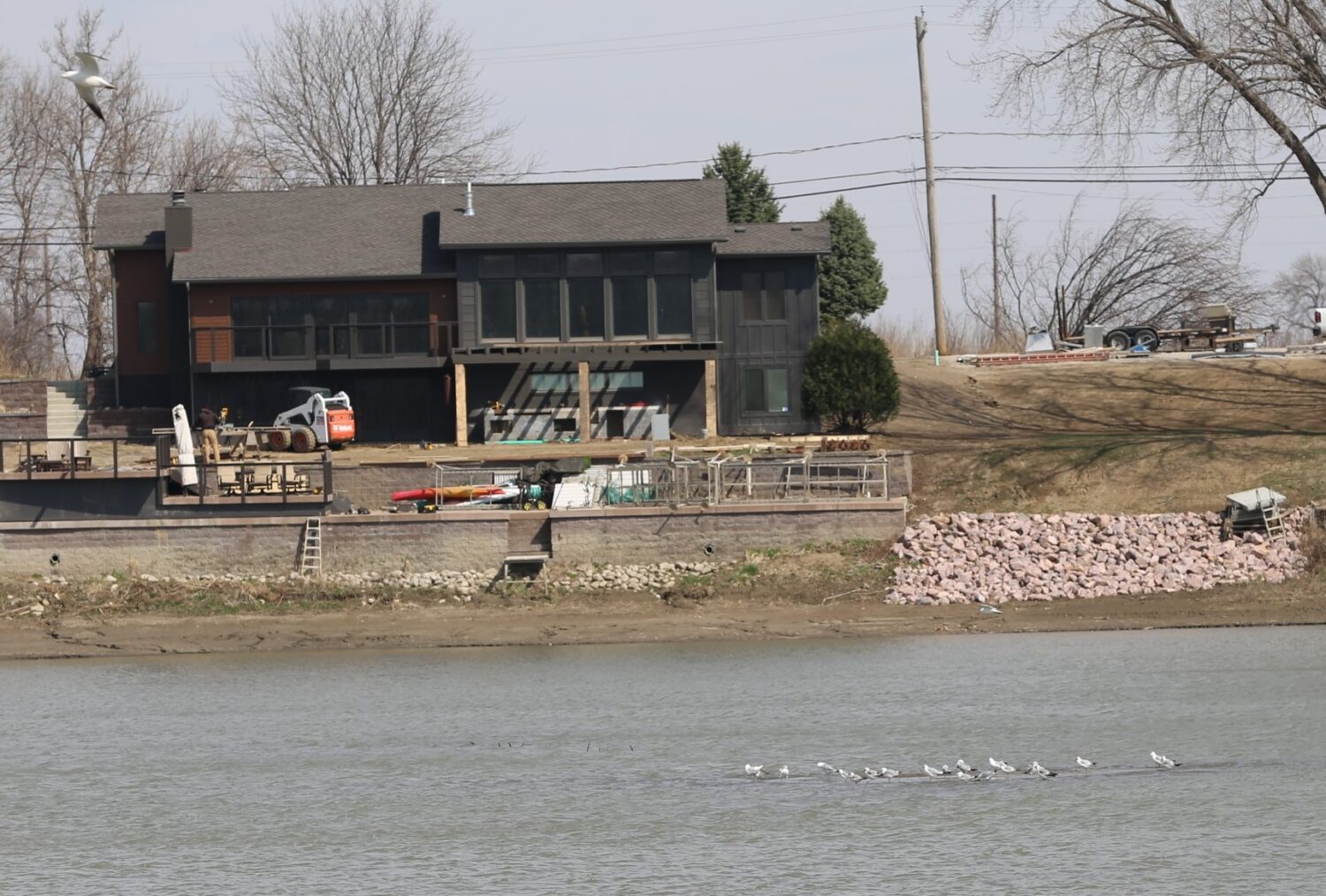
Nearly two years after a historic flood devastated the southeast South Dakota community of McCook Lake, local officials and community groups say the lake is moving closer to normal summer use.
But people who use the lake are divided about whether it’s ready.
Renae Hansen, who lives in the McCook Lake community, submitted a petition asking the state to maintain a no-wake restriction on the lake until further cleanup is completed. Hansen said 468 residents and lake users signed the document in one week.
“The reality on the ground is it’s not good to go,” Hansen said.
The petition states that 11 acres of the 223-acre lake have been cleared of debris, evidenced by an Army Corps of Engineers survey conducted after the state’s cleanup work. Hansen said the state’s work has left submerged hazards and newly formed islands that could become dangerous to people unaware of what’s under the water.
Dirk Lohry, with the McCook Lake Association, said Hansen and others overstate the danger, and their views do not represent those of most lake residents and the immediate community.
“Most of those signatures are not people who live on McCook Lake or even use McCook Lake,” Lohry said. “I don’t think that having 500 signatures gives this particular position any more credibility.”
Lohry said the lake has been surveyed with sonar and by boat, and hazards have been marked with buoys. He said the low water levels exposed areas that could pose problems, allowing cleanup crews and volunteers to identify and remove debris.
“We’ve done a pretty good survey of everything,” Lohry said. “Anything that could be a problem has certainly been exposed.”
Meanwhile, a group of local entities including Hansen’s employer, the McCook Lake Izaak Walton League, issued a press release describing recovery efforts as “ongoing.” The other entities are North Sioux City, Union County, and the McCook Lake Association.
The groups said more than 64 tons of debris and about 20,000 cubic yards of sediment have been removed through work involving South Dakota Game, Fish and Parks and Three Oaks Construction. Game, Fish and Parks used $1 million of state funds to contract with Three Oaks, of North Sioux City, after a competitive bidding process, according to the department. Work began on May 15 last year and concluded on the Aug. 1 deadline.
Additional visible debris has been removed by the McCook Lake Association with help from Stockton Towing, and known debris will continue to be marked with buoys and removed as water levels rise, according to the press release. It also says that water quality testing showed conditions were within acceptable ranges for recreational use, and that fish sampling showed contaminant levels within safe consumption thresholds and consistent with pre-flood findings.
Water has been pumped into the lake from the Missouri River since April 1, and the lake is expected to reach 7 feet of added depth soon. That will be the first time the lake has been full since the flood.
However, Hansen and some others fear that there won’t be enough depth between the hazards, like newly formed islands, and the surface.
“If you put 7 feet of water on top of one of these new islands, what happens if a 6-foot-tall person dives in?” she said. “You don’t think they’ll go 1 foot underwater?”
The June 2024 flood followed days of heavy rain and a record surge in the Big Sioux River. Authorities used a 1976 flood mitigation plan that diverted river water toward McCook Lake to protect North Sioux City and Dakota Dunes, hoping the lake would rise and spill over with minimal damage. Instead, the water slammed into dozens of McCook Lake homes, destroyed about 20 and carved deep gouges into the north shore. Some residents had to be rescued that night, but no one was killed.
The South Dakota Department of Game, Fish and Parks lifted the lake’s no-wake restriction on April 1 this year after cleanup work concluded, meaning boats can now drive fast enough to cause a wake.
Game, Fish and Parks did not respond to an interview request. Hansen said the department dismissed her concerns, arguing that swimming in any lake or river comes with risk.
“Not every other lake in South Dakota had a forced flood that took out the community,” Hansen said. “If South Dakota had a plan to divert the water to the lake, why did they not have a plan for recovery?”
Lohry said he cannot guarantee the lake is risk-free, but said that is true of any body of water.
“I’m confident that we’ve done a good enough survey on the entirety of the lake to where it’s certainly safe for boating,” he said.
Hansen said her concern is not only with residents who know the lake, but with Memorial Day and July Fourth visitors who may interpret the lifted wake restriction as a sign that the lake is back to normal.
“When they hear all that, why would they doubt what the authorities are saying?” Hansen said.
Lohry said there are plans to install additional signage that warns of safety risks.
The press release from the local groups says cleanup and testing will continue, and water levels are expected to drop again in the fall, creating more opportunities to plan for additional cleanup.