
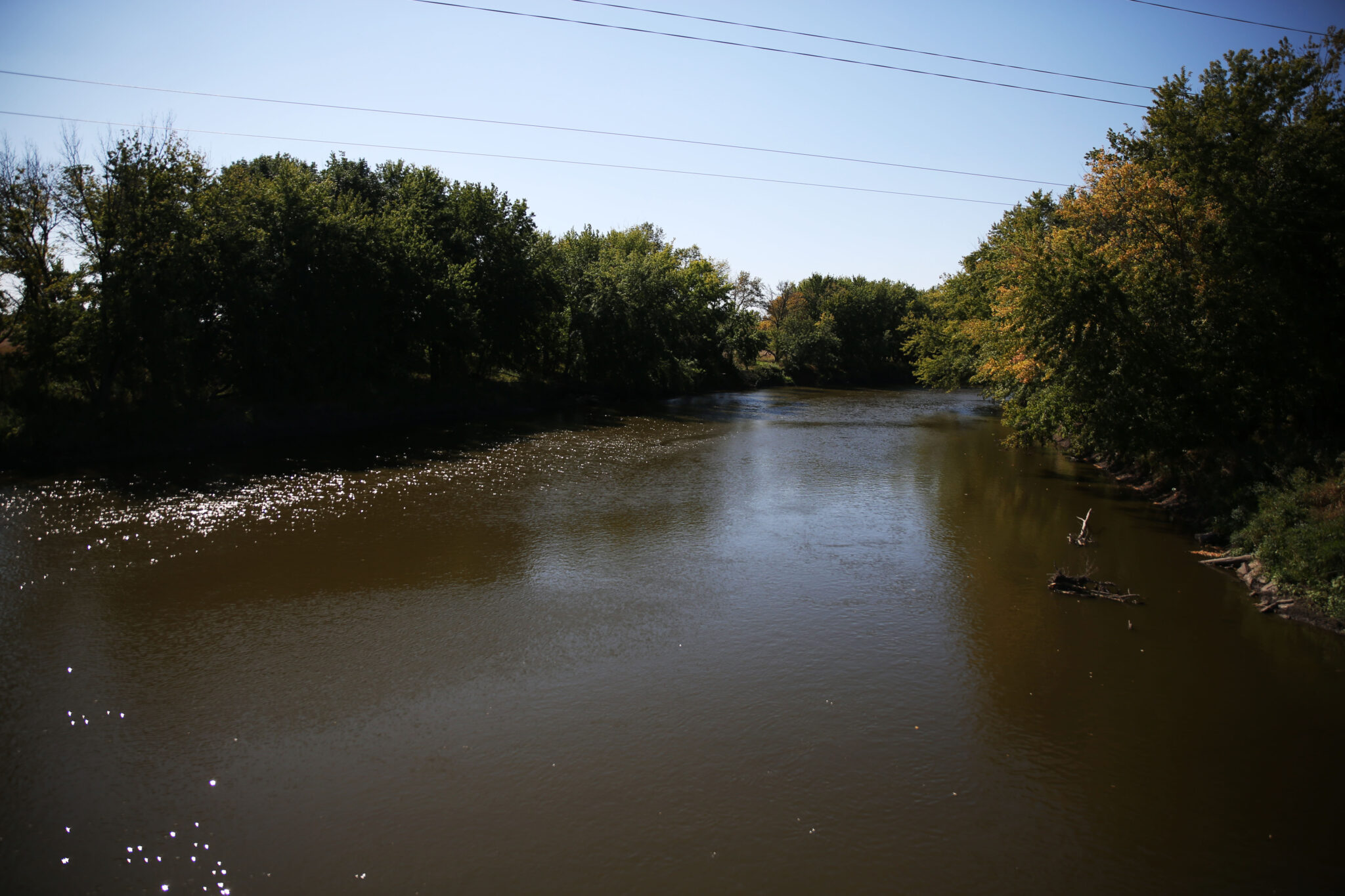
Joshua Haiar/South Dakota Searchlight
South Dakota’s environmental regulatory department has changed how it publicly presents its report on the quality of the state’s rivers, lakes and streams, leading to praise for the simplified presentation but concern about the reduced amount of information made available.
Instead of publishing the 2026 Surface Water Quality Assessment as a 200-plus-page document, as it has in the past, the Department of Agriculture and Natural Resources is directing the public to a scrollable presentation on the department’s website. A separate, online Surface Water Quality Dashboard allows viewers to click waterways on a map for information.
The reports come out every two years. The 2024 report included detailed sections on monitoring, methodology, assessments, pollution control programs, pollution causes and more.
That year, the state reported that 78% of assessed stream miles, as well as 68.5% of lake surface acres in the state, did not support one or more of their assigned “beneficial uses.” That refers to a practical purpose that a lake, river or stream is supposed to serve, such as swimming, fishing, boating or irrigation. If a waterbody is not meeting a beneficial use, it means the water is polluted beyond the standard set for that use.
The 2026 data show that 77% of assessed stream miles and 73% of lake acres are not supporting one or more of their beneficial uses.
Mercury in water remains the primary cause of water bodies failing to support their beneficial uses. About 70% of the tested lake acres in the state have mercury levels exceeding their standards, which is about the same as in 2024. The toxic heavy metal ends up in fish worldwide, largely due to atmospheric deposition. Coal-fired power plants release mercury into the air before it settles into lakes and rivers.
Another major pollutant is E. coli, with 68% of river and stream miles testing at levels that are too high.
But unlike past reports, the new one does not include statements such as one from the 2024 report calling nonpoint-source pollution, such as E. coli, the state’s “most serious and pervasive threat” to water quality, or examples of causes such as livestock waste, and failing septic systems. Those kinds of explanatory passages do not appear at the same level of detail in the new format.
Paul Lorenzen, watershed protection administrator with the Department of Agriculture and Natural Resources, explained to lawmakers during the 2026 legislative session why the format change was occurring. He said the prior format made the percentage of unsupported beneficial uses sound “troubling” and got “quite a bit of attention,” without the public fully understanding the meaning.
“We’re really trying to limit the narrative and be heavy on pictures, graphs, tables, things like that,” Lorenzen told lawmakers.
Lorenzen said waters not supporting all their uses are not necessarily unsafe or unusable. He said that, often, only one parameter or sample fails, criteria can be conservative, and increases in the percentage of non-supporting uses over time can reflect more data or changed standards, rather than worsening quality.
Lorenzen said the new format is intended to make the report easier to understand and less dependent on a dense executive summary.
Travis Entenman is the executive director of Friends of the Big Sioux River. He said his organization is “excited that the report is in a more user-friendly system, more interactive and we have more access to the data.”
However, “We do feel like there is a lack of analysis of the causes, and the next steps beyond saying this is the water quality level,” Entenman said. “Now what?”
The streamlined public presentation arrives as concern about agriculture’s role in water pollution has grown. A legislative memo last year said E. coli from livestock was the primary reason some streams did not support recreational uses.
In November, when that memo was shared, Senate President Pro Tempore Chris Karr, R-Sioux Falls, said the state could no longer “dance around” the possibility of stronger agricultural regulation if something was to be done about water pollution. Gov. Larry Rhoden then said he would set Karr straight.
Karr then sponsored and Rhoden signed a bill into law during this year’s legislative session that put $10 million toward water quality improvement programs. It offers $8 million to incentivize an existing water quality initiative that helps landowners plant buffer strips that filter agricultural runoff, and $2 million to help improve local water, wastewater and stormwater systems.