
Makenzie Huber/South Dakota Searchlight)
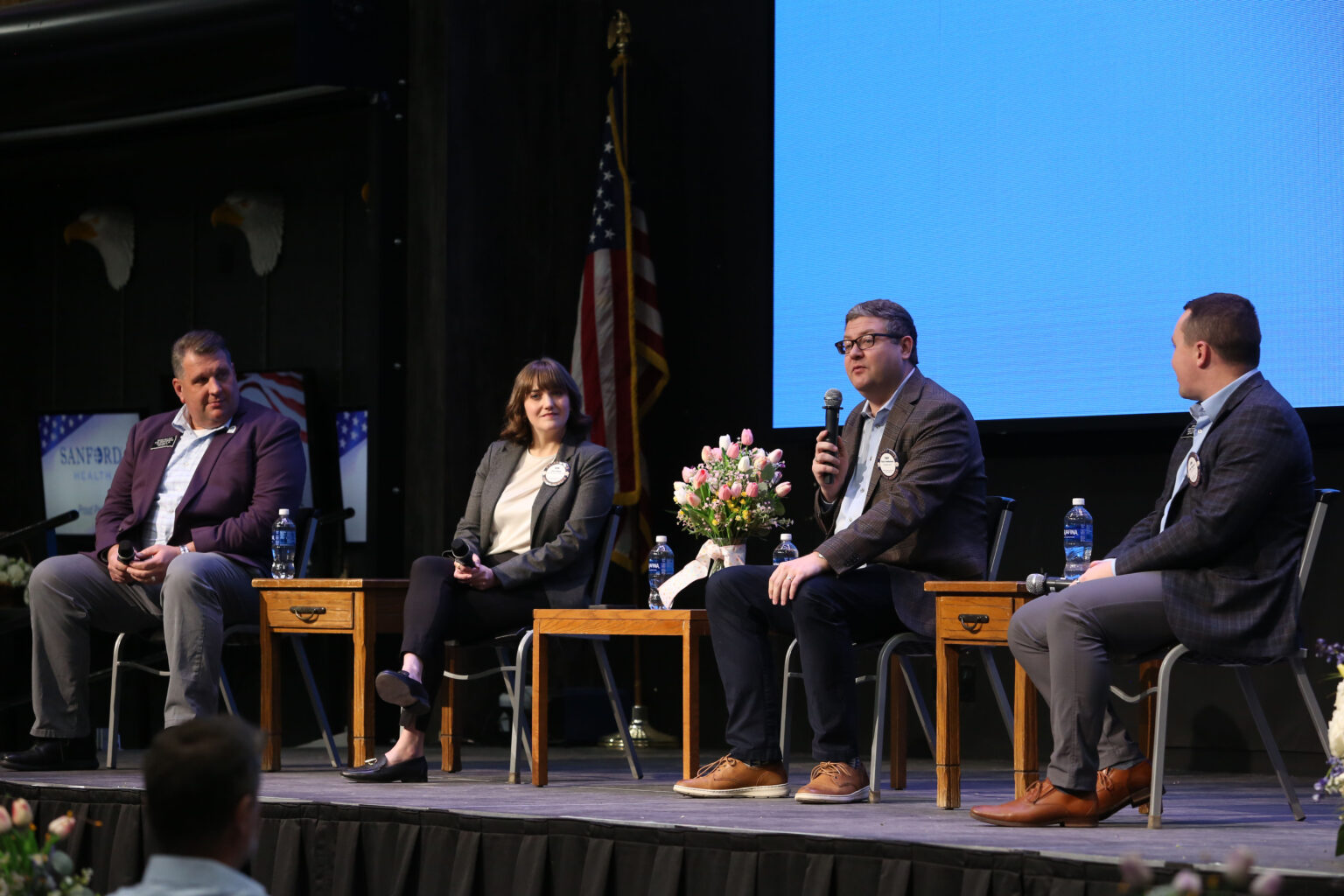
Makenzie Huber/South Dakota Searchlight
SIOUX FALLS — Last year, lawmakers coalesced around the need to improve rehabilitation programming and reduce recidivism rates as part of a broader investment in South Dakota’s prison system. Those two issues were sticking points in an ultimately successful effort to approve construction of a men’s prison.
Yet during the 2026 legislative session that wrapped up earlier this month, few bills were brought forward to address inmate rehabilitation needs, lawmakers on a Downtown Sioux Falls Rotary Club panel said on Monday.
One bill passed that makes it easier for people released from prison to return to their home area, rather than remaining in the area the prison is located. It requires the Department of Corrections to transport released people to their home county, the county where they were sentenced, or to a location equivalent in distance to the closer of those two options. Gov. Larry Rhoden signed the bill into law earlier this month.
Another bill would have awarded $2.7 million to the state Department of Corrections to expand an existing rehabilitation program within the prison system, but failed late in the session.
Sioux Falls Republican Rep. Brian Mulder introduced the funding bill. He told attendees that the “prison population is overwhelming the state and how we operate.”
“Although that was the number one priority last year, it was quickly forgotten for this year,” Mulder said.
Half the people released from prison in South Dakota return within three years, according to the Department of Corrections’ 2025 annual report — the highest recidivism rate in at least the last eight years. Lawmakers and prison reform advocates have pointed to a lack of rehabilitation programming as a cause, among other issues.
The drive to address rehabilitation needs this session was pushed aside by the desire to provide property tax relief across the state, Mulder told South Dakota Searchlight after the panel discussion. The result is “another year lost” in strengthening rehabilitation as a new Rapid City Women’s Prison nears completion and the state begins construction on a men’s prison in Sioux Falls that will replace the oldest parts of the penitentiary.
“When we’re not releasing individuals to the best of their potential from our prison, it just puts a strain on our community overall,” Mulder told Searchlight, adding, “it’s just spinning our wheels, costing us more and more dollars.”
He told members of the Rotary Club that lawmakers and state officials will “continue to have that conversation” through the state Correctional Rehabilitation Task Force. Gov. Larry Rhoden formed the group of lawmakers, government officials and nonprofit leaders last year while lawmakers considered approving the $650 million men’s prison.
The task force is focused on behavioral health, educational, faith-based and Native American-themed programs. Its next meeting will be in April, Lt. Gov. Tony Venhuizen confirmed on Monday.
Venhuizen told attendees he expects rehabilitation and recidivism legislation will be a “major topic” next winter as the task force provides recommendations. The inmate release bill from this session will put the responsibility on the task force to ensure post-release services are available across the state, he said, not just concentrated in Sioux Falls or Rapid City.
“So if they go back to Mitchell or Chamberlain, or wherever they wind up, that they have the services there to be successful, too,” Venhuizen said, “because we don’t want repeat customers in this business.”
House Minority Leader Erin Healy, D-Sioux Falls, said she believes the task force and conversation around rehabilitation is a progressive move. Where South Dakota can improve, she said, is prevention and diversion.
That includes analyzing data and trauma-based care options to ensure South Dakotans “live a life where they thrive and don’t necessarily go down the wrong pathway.”