
Bart Pfankuch/South Dakota News Watch
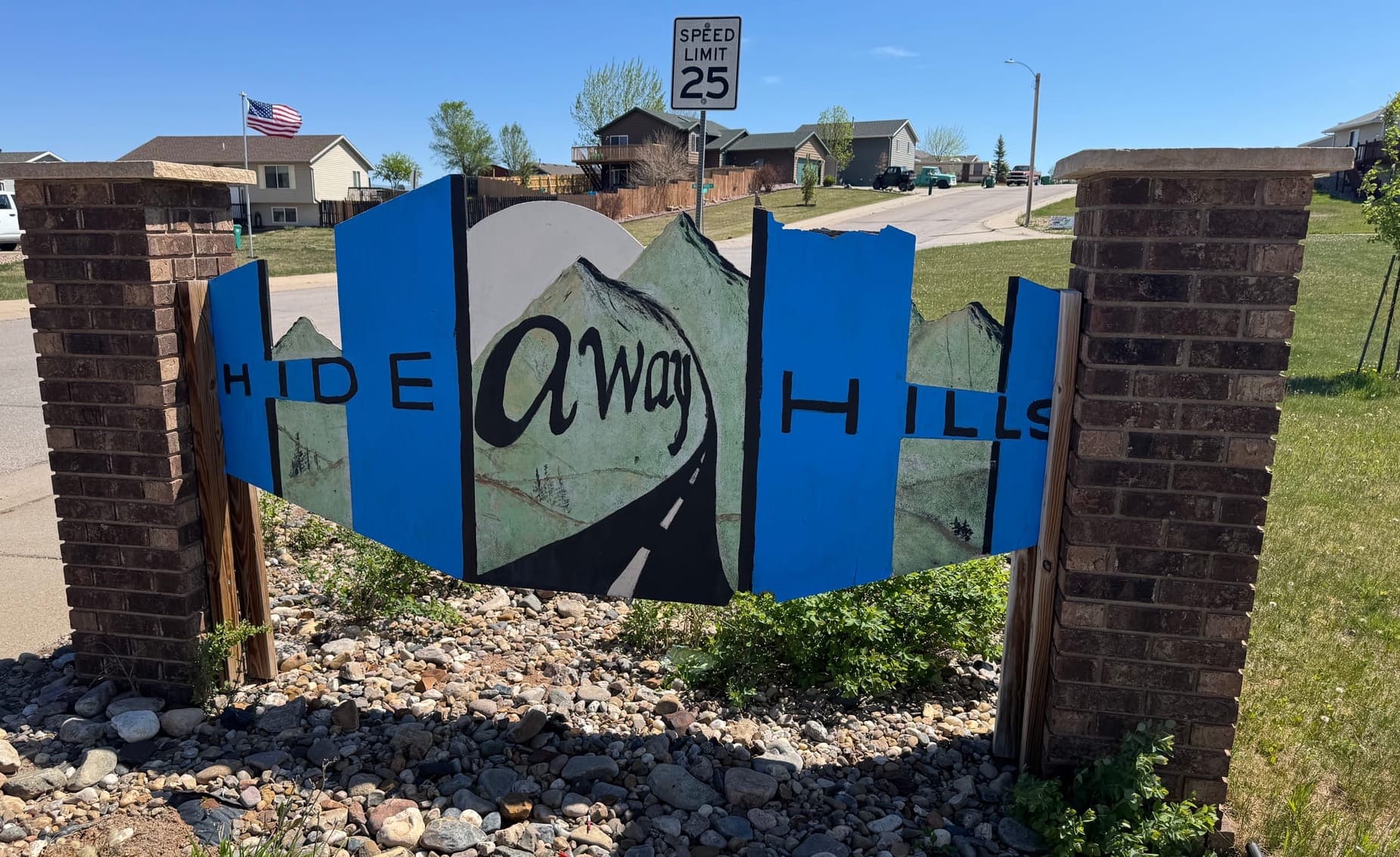
BLACK HAWK, S.D. – Six years ago, a huge sinkhole opened in a residential neighborhood in this unincorporated town that serves largely as a bedroom community for Rapid City.
After all that time, the homeowners directly affected and those put at risk by the sinkhole have received no financial relief for their ongoing or potential losses.
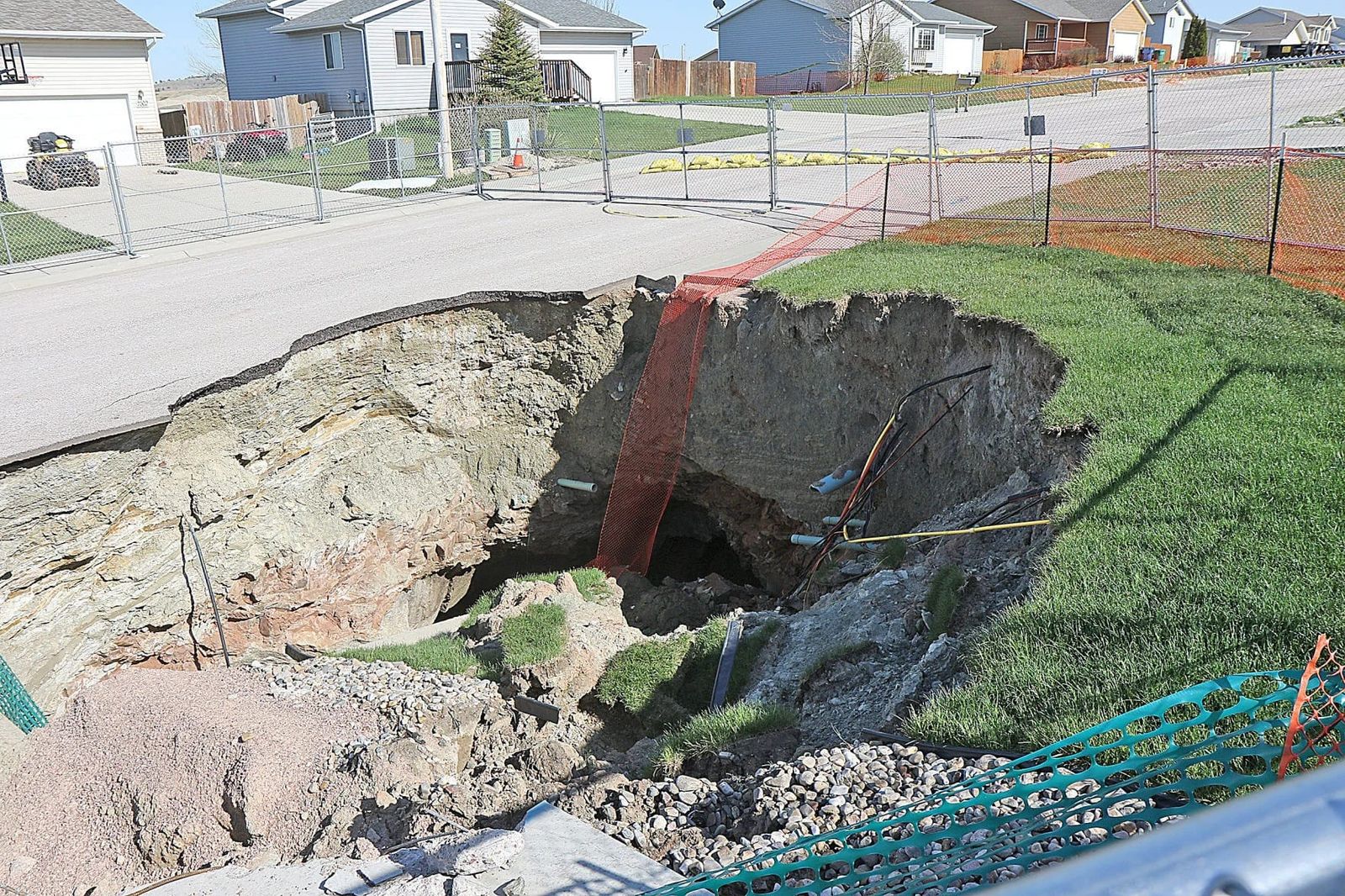
Meanwhile, the immediate area around the sinkhole in the northeast end of the Hideaway Hills subdivision – easily visible from nearby Interstate 90 – has an almost apocalyptic appearance.
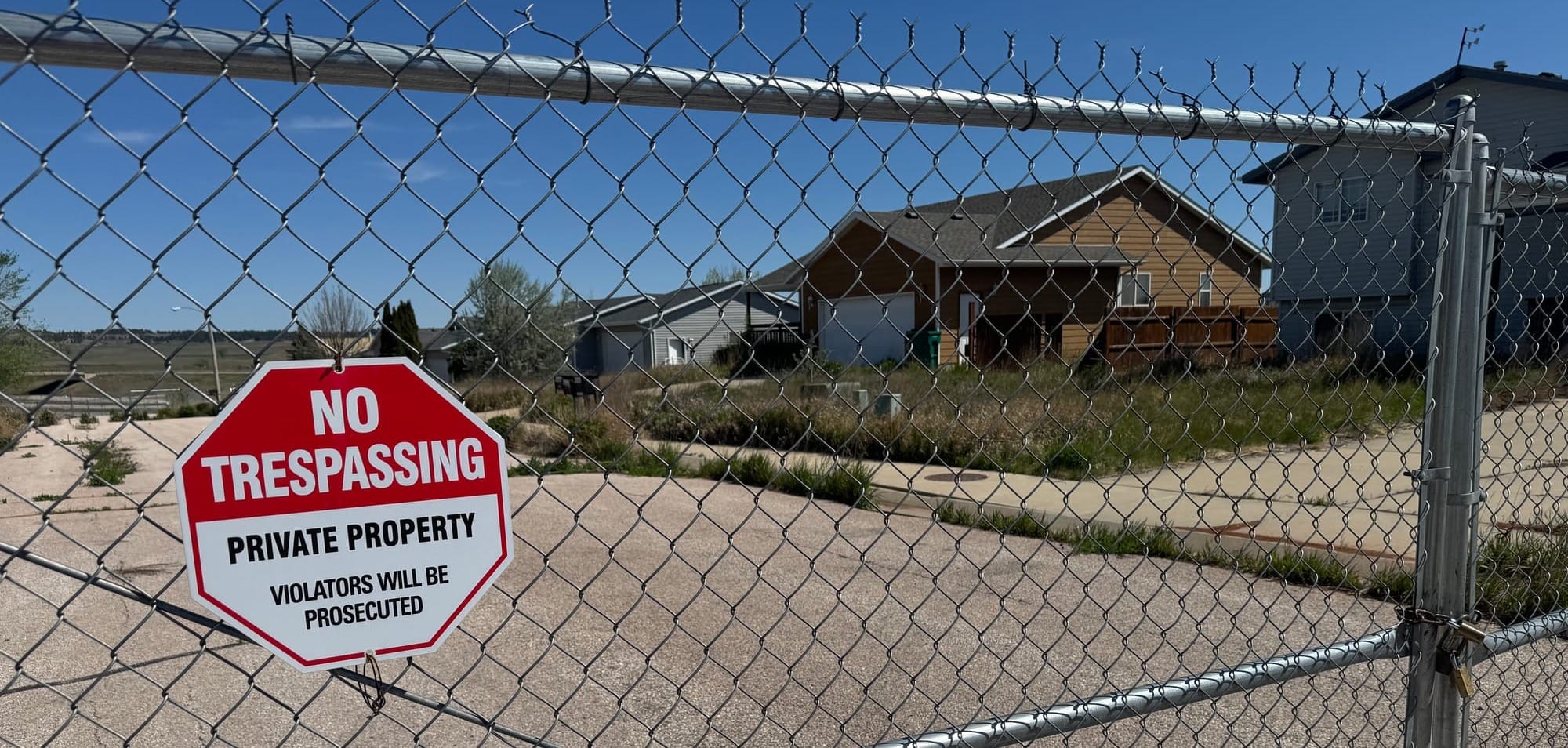
Chain-link fences surround the roughly dozen properties where residents were forced to flee in April 2020, unable to return over fears of further collapse of the underground mine upon which their houses were built.
Their homes and many of their belongings have since been left to rot, and their properties are virtually worthless. Tall grass and weeds have overgrown their yards and the road. A vehicle sits stalled in one driveway. Fences are collapsing.
Those families and about 150 other neighboring homeowners have pinned their hopes for help on a lawsuit against the state now pending before the South Dakota Supreme Court. They allege that the state, which previously owned and mined gypsum on the site, is responsible for monetary damages of more than $60 million.
“If the Supreme Court rules against us, we’re pretty much done,” said Carolyn Lorge, a retiree who lives with husband Mike on East Daisy Drive in Black Hawk, just two houses away from the condemnation area. “I mean, you can still move, you can still try to sell your home, but as for being compensated for your loss, you’re pretty much out of luck.”
As the Supreme Court considers the case, News Watch conducted interviews, reviewed documents and media accounts, and listened to the high court hearing to provide this update on the sinkhole saga that has simmered for six years without resolution.
A sudden opening in the earth
The origins of the sinkhole date back to the early 1900s when a company called Dakota Plaster dug underground mine shafts in search of gypsum, which slows the hardening of concrete.
When the state of South Dakota opened its own concrete plant in Rapid City in 1925, it began mining for gypsum, including on the future subdivision site. Lawyers for the state said mining was done only on the surface and that no underground mining was undertaken, though blasting did occur.
In the 1990s, the state ended mining operations, reclaimed it for grazing and sold it in 1994 to a private owner. That owner lived and ranched on the land before selling it to a developer who obtained permission from Meade County to build a subdivision in the early 2000s.
The presence of the mine was noted at several points during the land transactions, though homebuyers were not told, according to court documents. Terra Larson, a Pierre attorney representing the state in the Supreme Court case, said the developer disclosed the mine location to the home builder, “who fraudulently concealed it to all the people who would be living there.”
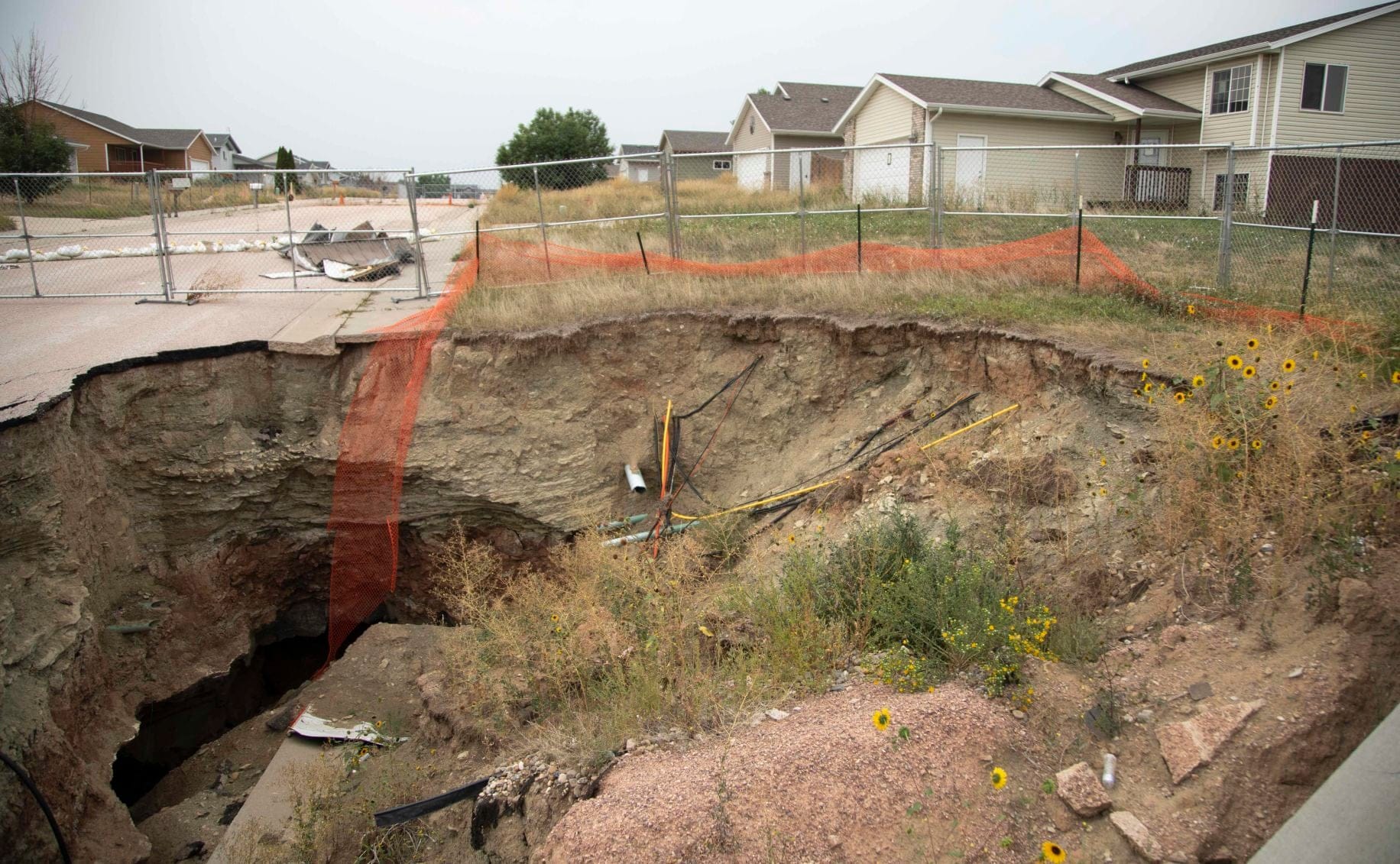
As early as 2008, Hideaway Hills homeowners began reporting shifting in the foundation of their homes, and in April 2020, the sinkhole opened in the northeast edge of the subdivision. No one was injured, though at least one neighbor was nearby when it happened.
Amateur spelunkers who explored the sinkhole said the main cavern is 85 feet deep, 650 feet long and about 100 feet wide. They found construction debris and even an old car inside the cavern. Scientists found that the tunnel does not extend under I-90, but research by Montana Technical University found that two other tunnels exist under the subdivision with either high or medium risk of geological disturbances.
Seeking a high court ruling
In July 2024, a class-action lawsuit was filed against the state, arguing that the gypsum mining operation was not properly reclaimed when it sold the land. A circuit judge ruled in favor of the state in September 2024, and the homeowners appealed the case to the Supreme Court.
With representation by the national law firm of Fox Rothschild, the homeowners argued that the state improperly filled in areas where it had mined with overly soft materials that have worn away and led to the sinkhole. They argued that the state’s failure to properly close its mining operation is akin to an “inverse condemnation,” or a taking of their land similar to the use of eminent domain.
They said the state is also responsible because it retained the mineral rights to the land after the sale, and because the state blasted open the underground mine and further weakened it, a claim the state denies.
“Plaintiffs’ properties are sinking into the earth, and their houses are coming apart at the seams. The state is responsible for this destruction. It owns the subsurface beneath Plaintiffs’ properties, a subsurface it filled with crumbling minerals and loose garbage,” the October 2025 appeal to the high court states. “These materials are insufficient to support the surface, and it was only a matter of time before the ground began to collapse under its own weight.”
The state said it did not open any tunnels during its surface mining operations, and argues largely that the lawsuit is technically a “tort” from which the state has sovereign immunity that blocks such legal actions.
The Supreme Court is expected to rule on the case in the near future. It could side with the state or send the case back to the circuit court where, among other things, a trial for damages could be ordered.
‘Worst things you can put up there’
Underground mines once used to take coal or gypsum are the biggest culprits of sinkholes in the Mountain West region of the United States, said Paul Santi, a sinkhole expert and professor at the Colorado School of Mines.
“Unfortunately, it is fairly common, but subdivisions are among the worst things you can put up there,” Santi said.
Gypsum is soluble in water and prone to wearing away over time, he said.
Santi, who has testified as an expert witness in sinkhole lawsuits, said he is also called upon to help avoid developments from being located on surfaces prone to collapse.
Unlike South Dakota, Colorado has an extensive mine mapping service and a geological survey agency within state government, which helps avoid disasters like the one in Hideaway Hills, Santi said.
He said that for one proposed development in Colorado, he spent only 15 minutes looking at mine maps to determine the proposal was not sound.
“I would think that an engineer or geologist who had access to that information could have seen this problem beforehand,” he said. “There’s clearly a chain of knowledge there that broke down in a few places.”
Living with losses and an ‘eyesore’ next door
For those in and around the evacuation zone, the emotional stress can rival the financial worries that have resulted from having a sinkhole in your neighborhood.
With a fence and warning signs a few steps north of their driveway, Carolyn Lorge told News Watch that she isn’t sure if she could sell her family’s four-bedroom, three-bath home on East Daisy Drive, even just for the $190,000 they paid for it a decade ago.
“That used to just eat me up, all that uncertainty,” Lorge said. “But as time goes by, you live with it, and you make the best of it.”
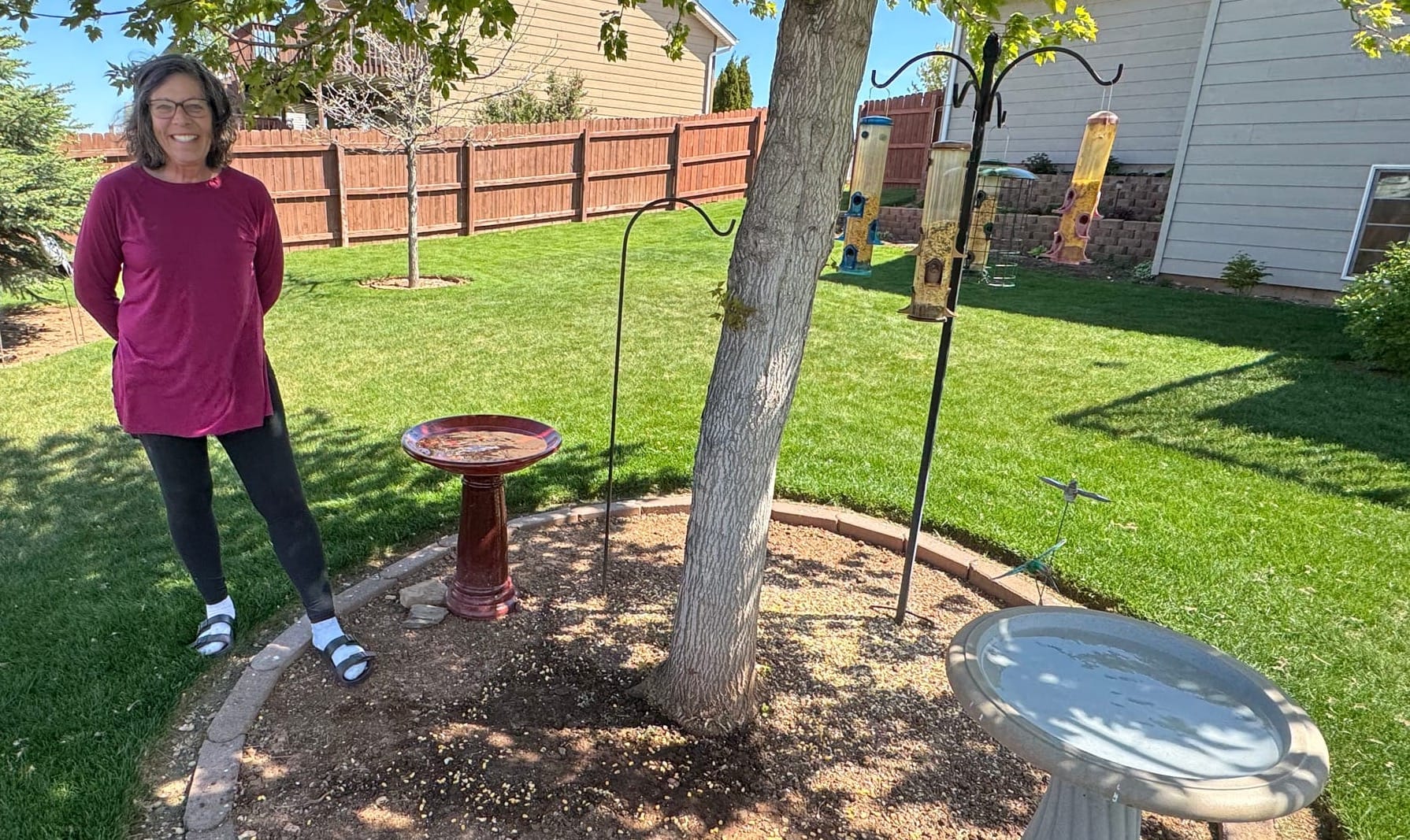
Neighbors within the evacuation area have gotten some relief from their mortgage lenders, but all expect that their homes are no longer of value, Lorge said. A home across the street from the Lorges sold for about $200,000 a while back, and the Lorges did get some property tax relief from Meade County a few years ago, she said.
But the homeowners who are part of the class-action lawsuit against the state, including the Lorges, said they haven’t been supported by government agencies or elected officials. Lorge said there is no money to seek from the builder of the homes, leaving the state as the only viable litigant.
“Our lawmakers and the rest of them won’t even say that what happened to us really sucks,” she said. “Somebody dropped the ball here, but no one wants to take any accountability.”
Lorge said that over the years, her hope for a positive resolution has slowly faded, and that she and her husband are moving forward with their lives in the happiest way possible. Mapping of the tunnels after the sinkhole appeared showed that their house is not directly over an underground mine, she said.
Lorge said her last ditch hope is that the Supreme Court rules in favor of the neighbors and that there is then a jury trial for damages, which could lead to a sympathetic verdict for the residents.
“For the first few years, you clung onto all kinds of hope and thinking that any new finding would be our saving grace, and it turned out it wasn’t,” she said. “But this place is so us, and we really love it here, even living next to this eyesore.”