
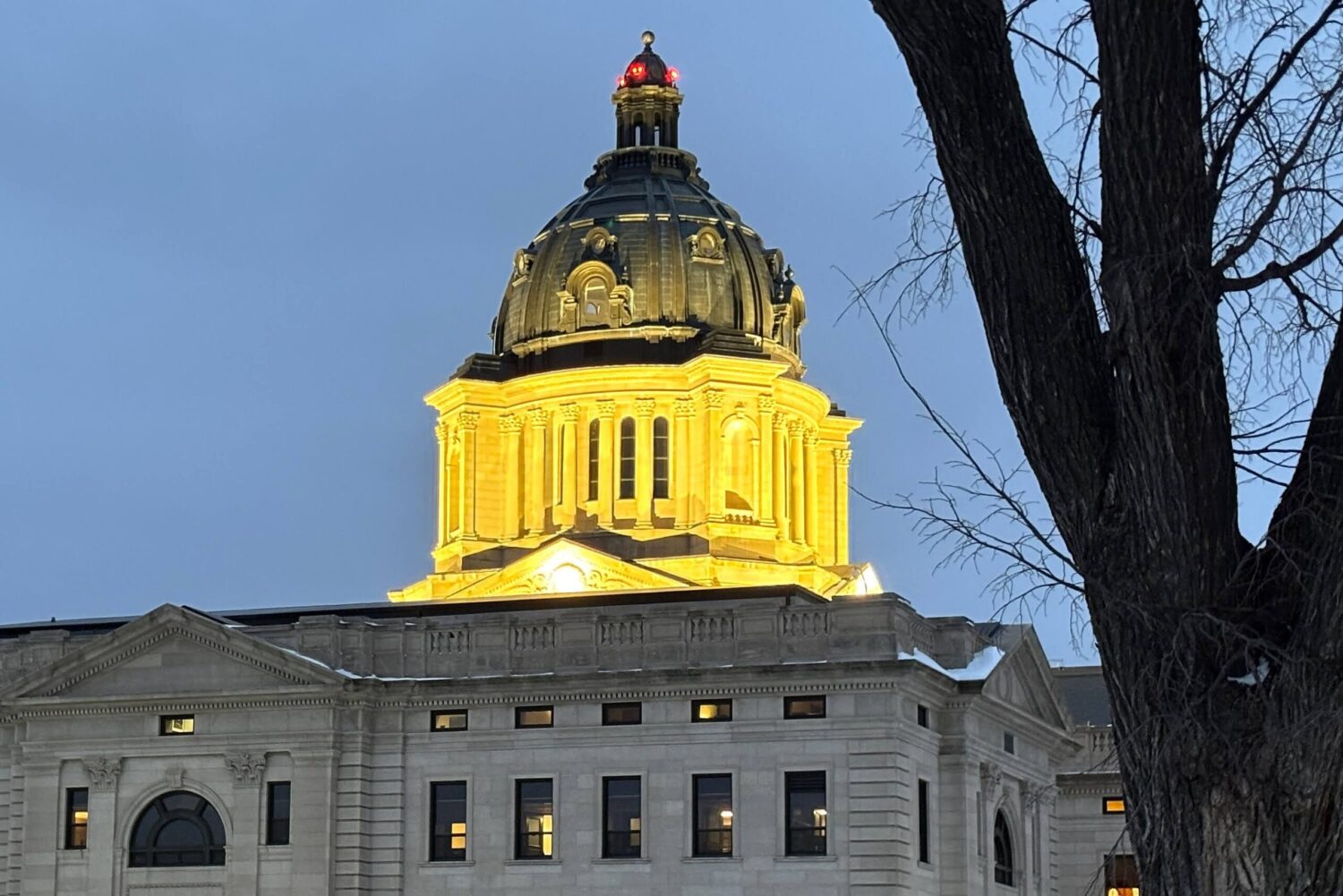
John Hult and Joshua Haiar/South Dakota Searchlight
PIERRE — South Dakota lawmakers voted to recognize the 250th anniversary of the U.S. Declaration of Independence, but not before adjusting language on Indigenous people and civil rights leaders in the text of the nonbinding resolution.
Identical resolutions on the anniversary appeared on the floor of the state Senate and House of Representatives at the same time Thursday.
In its original form, the resolution included language saying that “indigenous nations, generations of immigrants, civil rights advocates, and countless others have worked tirelessly to promote and protect freedom and justice for all, and to create, based on those principles, the United States we recognize today.”

The terms “indigenous nations” and “civil rights advocates” did not survive.
Brookings Republican Tim Reed was the prime sponsor of the resolution in the Senate.
Piedmont Republican John Carley introduced an amendment to change “generations of immigrants, civil rights advocates, and countless others” to “generations of natural-born Americans and immigrants.”
Carley said the change “moves the narrow recognition” of those who contributed to the success of the U.S. to “a broader group of people who have also worked tirelessly, and still incorporates those that were singled out.”
The amendment passed on an 18-15 vote. Among the supportive votes was one from Sen. Red Dawn Foster, a Democrat and tribal member from the Pine Ridge Reservation. The amended resolution passed 33-0, with two senators excused.
Rep. Phil Jensen, R-Rapid City, introduced the same amendment to the House version of the resolution.

Rep. Kadyn Wittman, D-Sioux Falls, was the resolution’s prime House sponsor. She said the change would strip meaningful recognition from those who’d contributed to the nation’s success.
“This resolution is supposed to be a moment of unity, but unity is not forged through erasure,” she said.
Rapid City Republican Rep. Peri Pourier, who left the Democratic Party in September, backed the amendment. The Oglala Sioux Tribe member disagreed with Wittman’s characterization of the amendment as “erasure” of Native Americans from the resolution’s verbiage.
As amended, the sentence in question still used the words “natural-born Americans.”
All tribal members “are natural-born Americans,” Pourier said, “and we did contribute to the rise of this nation.”
The original version of the resolution in both chambers also said “the tribal nations within this state’s borders, as well as this state’s pioneer heritage, agricultural innovations, and its resilient civil spirit contributed to the growth of this incredible nation, and will continue to support the United States of America for many years yet to come.”

The reference to continued support from tribal nations struck Pourier as an attack on tribal sovereignty.
“It is not the role of the state of South Dakota to mandate tribal nations to do anything. Tribal nations are sovereign nations,” she said.
That issue came up in the Senate, as well. Senators voted to remove the verbiage in an amendment, separate from Carley’s and sponsored by Foster, that was never introduced on the House side.
That Senate amendment removed the words “will continue to support the United States of America for many years yet to come.”
The House’s resolution garnered “no” votes from the House’s five Democratic members. Pourier ultimately supported the resolution.