
Meghan O’Brien/South Dakota Searchlight
A South Dakota group won another victory Tuesday in its effort to preserve adequate time for petitioning questions onto statewide ballots, but a state official immediately pledged to continue the fight in court.
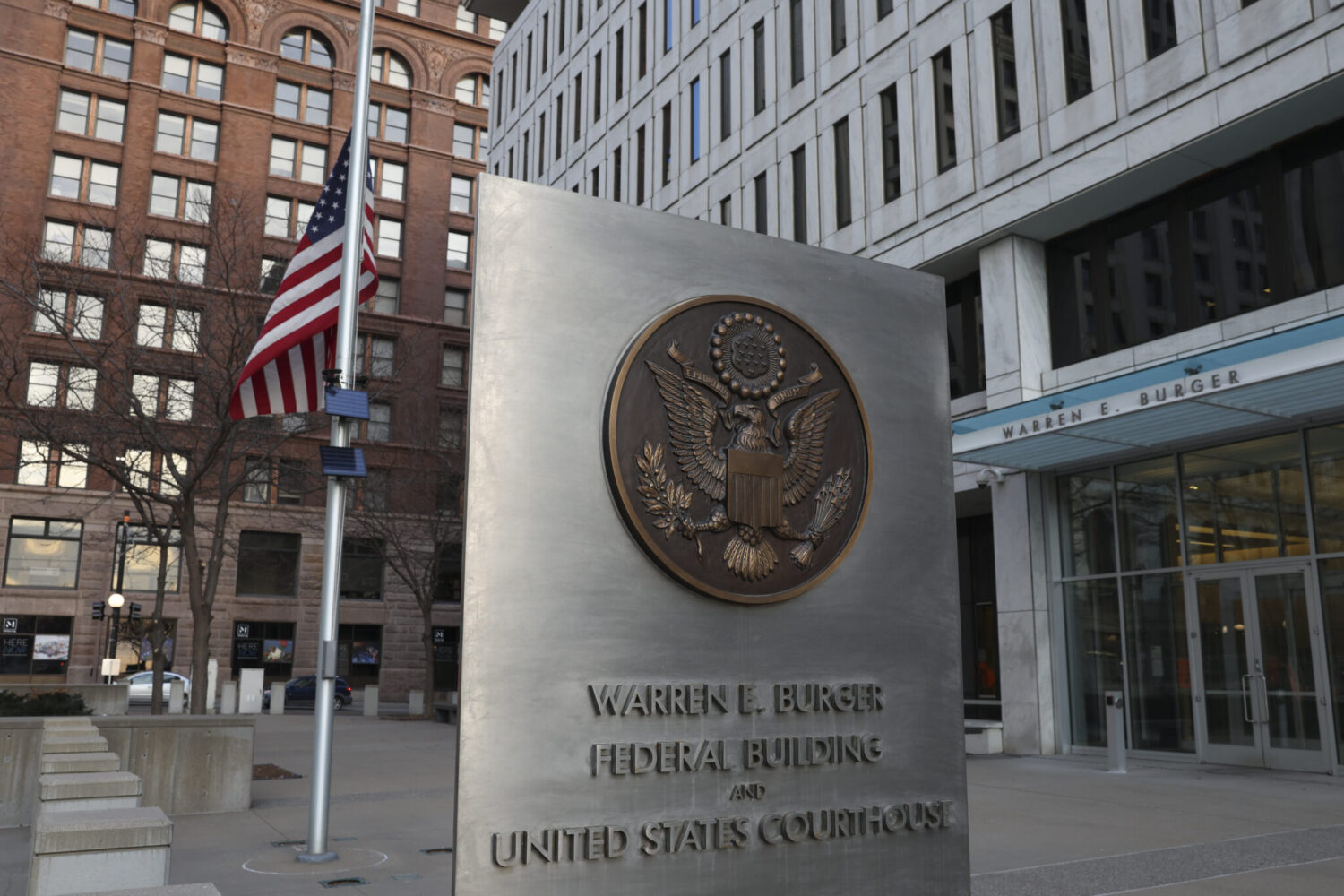
A federal appeals panel upheld a lower court’s ruling that state lawmakers violated the First Amendment when they moved up the deadline for submitting petition signatures by three months. After the three-judge appeals panel issued its ruling, South Dakota’s attorney general said he will request a review by the entire 11-member 8th Circuit Court of Appeals.
Petitioners need 17,508 signatures from registered voters to put a proposed law on the ballot in South Dakota, and 35,017 signatures for a proposed state constitutional amendment. South Dakota lawmakers approved legislation last year that moved the deadline for filing signed petitions in a general election year from the first Tuesday in May to the first Tuesday in February.
A group that’s been involved in numerous ballot questions, Dakotans for Health, challenged the law in federal court. Last August, a district court judge ruled the law violates the First Amendment, writing that moving the deadline three months earlier “arguably goes beyond merely inconvenient and enters the realm of severe.” The state appealed that ruling.
During arguments heard by the three-judge appeals panel in June, the state’s lawyer, Paul Swedlund of the state Attorney General’s Office, said a shorter deadline gives more time for potential litigation over ballot questions to play out.
“The more time that you have to litigate a case, the better chance it is that you’re going to get it finished,” Swedlund said then.
Judge Raymond Gruender disagreed with that assertion, writing in Tuesday’s opinion that “even if that were the case, however, nothing in the record indicates that the new deadline advances that interest in any meaningful way.”
Gruender added that the state didn’t provide “sufficient factual or legal support” for its argument that pre-election litigation on petitions would bolster the confidence of voters in the initiative and referendum process. Judge Jane Kelly joined Gruender in the decision.
In a dissenting opinion, Judge James Loken wrote, “the Constitution does not authorize this federal court micromanagement of state elections.” The now-unenforceable law would have furthered South Dakota’s “interest in election integrity by extending the time for pre-election petition litigation,” Loken added.
Republican South Dakota Attorney General Marty Jackley highlighted Loken’s comments Tuesday in a news release.
“While we respect the panel’s decision, we still believe the South Dakota Legislature reached a fair solution to our petition process, without infringing on the First Amendment,” Jackley said.
Law and litigation affect petitioning efforts
Rick Weiland of Dakotans for Health told South Dakota Searchlight in June that his group was still collecting signatures for two potential ballot questions. He believed there was no enforceable deadline, because state lawmakers had not passed any further legislation regarding the petition deadline as the lawsuit played out.
Though the group is still collecting signatures, the effort may be winding down soon, Weiland said. Counties face a Sept. 16 deadline to have ballots printed for the Nov. 3 general election.

“We’re really far away from being able to close this loop in a quick, fast way,” he said. “I think it’s very unlikely we’re going to be able to submit.”
The law “did have a chilling effect on our ability to raise the funds we needed, and to basically get volunteers engaged,” Weiland said. “It takes a well-funded, well-coordinated effort to be successful, and with that bill hanging over our heads and tied up in the courts, it’s very difficult to get that kind of support.”
His group is circulating two potential constitutional amendments that Weiland said would be a check on the power legislators have in Pierre.
The first of those amendments would protect voter-approved ballot measures from being changed by state lawmakers for seven years. Then, lawmakers would need a supermajority vote in both chambers and would still need voter approval.
The second would require that changes to the initiated ballot measure process that are approved by the Legislature — like regulations on how organizations or individuals collect signatures — would automatically be referred to voters at the next general election.
Legislators have placed four of their own proposed constitutional amendments on the ballot this year. Those amendments would allow the state to withdraw from expanded Medicaid if federal funding for it declines, clarify that a voter must be a U.S. citizen, establish a trust fund for unclaimed property proceeds, and require that future state constitutional amendments receive 60% support from voters rather than a simple majority.